
How Mining Giant Glencore will Double Copper Production
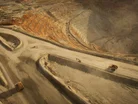
The global procurement landscape for critical minerals is set to be shaped by Glencore's ambitious plan to more than double its copper production over the next decade.
Copper has become central to the company’s future as the world seeks to build out electric vehicles, renewable energy infrastructure and power grids. The Swiss-headquartered firm is targeting production of more than 1 million tonnes of copper annually by the end of 2028, eventually rising to 1.6 million tonnes by 2035.
This strategy follows the collapse of the recent US$260bn merger with fellow mining giant Rio Tinto, which failed to reach an agreement on valuation.
Meeting guidance for key commodities
Reliability of supply remains a key factor for industrial consumers in the automotive and power sectors. Glencore reported that it met its guidance for full-year production volumes across its key commodities for the second year in a row.
This performance was supported by a strong second half in 2025, where copper output was nearly 50% higher than the first six months. “For the second consecutive year, we met our guidance for full year production volumes for our key commodities, reflecting the ongoing benefits of our recently optimised and simplified operating structures,” said Gary Nagle, CEO of Glencore. Gary added that accountability has improved delivery.
Diversified operations across 30 countries
Glencore, which was established in 1974 as a trading company, has operations in more than 30 countries and a workforce of about 140,000. It operates as a miner and a world-leading marketing franchise, providing a unique perspective on commodity flows and market demand.
While the company is moving towards metals essential for the energy transition, it remains the largest listed coal producer. This dual role allows it to support current energy needs while providing the materials required for future infrastructure. The firm’s marketing business recorded a 15% increase in adjusted EBIT during the second half of the year.

Sourcing from high-grade assets
High grades and improved recoveries at sites such as KCC, Mutanda and Antamina have been fundamental to the company's recent production success.
The finalisation of a land access package with Gécamines for KCC in the DRC is expected to further improve productivity and costs, securing a pathway to 300,000 tonnes of copper per year.
“At our recent Capital Markets Day, we highlighted our exceptional portfolio of copper assets and projects, outlining our pathway... to become one of the world’s largest producers over the next decade,” said Gary. He said that the portfolio consists of highly capital-efficient growth options that are well-positioned to meet global supply challenges.
Optimising the global asset base
The company has continued to refine its sourcing portfolio through strategic acquisitions and disposals. This included the acquisition of the Quechua copper project in Peru and the sale of the Pasar copper smelter and Puerto Nuevo coal terminal.
These actions are intended to simplify the asset base and focus on core, high-value commodities.
“We continued to shape and optimise our portfolio, including the acquisition of the Quechua copper project in Peru,” said Gary.
He said these efforts are part of a broader strategy to support long-term value. The firm is also exploring a potential 40% stake sale of its DRC assets.
Securing the transition enabling supply
Procurement professionals tracking the energy transition will note that copper demand is projected to rise significantly due to electrification and artificial intelligence infrastructure.
Glencore is positioning itself to bridge the supply gap by progressing its organic production growth options. Although the Rio Tinto deal would have created a massive consolidated entity, Glencore’s standalone case remains focused on its diversified commodity mix and marketing expertise.
“We are uniquely positioned to support the energy needs of today while providing many of the transition-enabling commodities the world needs as demand changes,” said Gary.

Executives
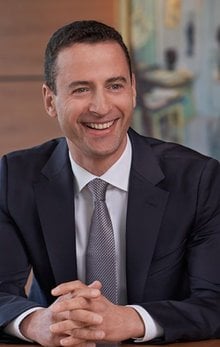
Gary Nagle
CEO