How International Sourcing Affects European Procurement

In its recent study, using data from 2021-2023, eurostat has discovered that 73% of EU enterprises source most of their products from within the European Union, demonstrating the importance of the European single market.
The research also examines how sourcing patterns are determined by industry, exploring trend within different sectors.
Sourcing strategy has become a more significant in recent years, as businesses look to build supply chain resilience from the ground up - particularly as global volatility grows.

Sourcing preferences
Enterprises around the world organise their operations and production into global value chains (GVCs), relying on global suppliers who act as smaller - but important - cogs in their machine. For European Union policy, GVC statistics provides analysis on the movement of EU jobs to countries outside the EU, dependency on foreign parts and the EU's role in GVCs.
As a result, the EU can understand how much of the region's global trade is 'local' versus reliant on other countries. The data on GVCs is important to understanding how each business meets policies on trade, job sustainability, economic development and ethical regulations. The sustainability of a company has become a key focus for many business leaders throughout 2025, recognising that sustainability within a supply chain leads to business resilience, cost savings and more loyal customers.
For international sourcing, the primary destination for EU countries was other EU countries at 73%, followed by non-EU European countries (26%), India (19%) and the UK (17%). When sourcing internationally, proximity remains a key factor to consider, as does labour costs.
The most international sourcing comes from small, open economies which have high labour costs. This was seen across Slovakia (11.38%), Ireland (9.86%) and Denmark (9.39%). This is contrasted to Bulgaria (0.80%) and Poland (1.11%), where enterprises did not engage as much with international sourcing.
Within this report, insourcing refers to the international sourcing to a foreign organisation within the same multinational enterprise group, whereas outsourcing refers to sourcing to external providers. From the companies which partook in sourcing abroad, 72% of them had a focus on insourcing, contrasted to 39% of who outsourced their business functions.
Sector trends
When examining sourcing trends throughout industries, eurostat found that more enterprises from the business services sector sourced abroad (60%) than those within the industry and construction sectors (40%).
The leading enterprise which took part in international sourcing was the manufacturing sector (37%), followed by wholesale and retail trade; repair of motor vehicles and motorcycles (17%) and information and communication sectors (12%). On the other hand, less than 1% of enterprises in the electricity and gas sectors, mining and quarrying sectors and water and waste management sectors engaged in international sourcing.
Manufacturing enterprises initially used international sourcing to move their production abroad, but this has now expanded due to the digitalisation of the world. Now, because processes can be described clearly, discussed electronically and monitored from other countries, more business functions are now sourced internationally.
As a result, more support functions are now sourced internationally than core functions, with 72% of enterprises sourcing support functions, against 51% sourcing core functions.
The most commonly sourced business functions abroad were:
- management and administration (47%)
- information and communication technology services (29%)
- production of goods and materials (27%)

Barriers and drivers
GVCs have demonstrated the difference in European purchasing and supply. 48% of enterprises purchased raw materials from the EU, whereas only 16% supplied them to the EU. This is supported by trends with components, as 35% of enterprises purchased components from the EU, whereas only 25% supplied to the EU.
When looking at services rather than goods, enterprises also reported a higher purchasing than supplying within the EU. 37% of businesses purchased distribution and logistics services from the EU, whereas only 27% supplied them. This was also seen in the realms of information and communication technology services (36% purchasing, 22% supplying).
GVCs in the EU have seen a rise in barriers and extra costs, including transport disruptions, supply shortages and rising input costs. 56% of GVCs stated issues from Covid-19 related issues and 62% of enterprises were affected by energy-related input costs.
As a result, many changed procurement and supply chain strategy, turning towards digitalisation, strengthening EU-based partnerships, farshoring and supplier diversification.
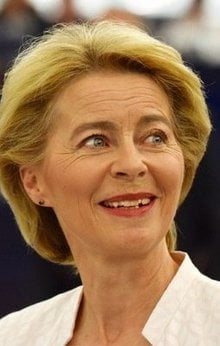
At the beginning of her second term, European Commission President Ursula von der Leyen said: “We need to make it easier to do business in Europe, to innovate in Europe, and to embrace the newest technologies.”
The desire for maintaining a strong European economy is high, with von der Leyen taking steps to give European businesses a lift, however, they need to be long-lasting and sustainable improvements in order to make a difference.
The main driving point for this business decision relates to cutting labour (34%). This is followed by strategic decision taken by the group head (33%) and reduction of other costs which do not relate to labour (28%).
On the other side, enterprises are facing a range of barriers when considering international sourcing. The main barriers are described as legal or administrative (33%) and tax barriers (28%).
The reliance on international sourcing means that jobs are moving away from the domestic economy. The relocating of business services abroad has meant an increase of job losses and a decrease of job creation. This had a larger impact on lower skilled jobs, at a net jobs lost of 67,520, than for high skilled jobs, at a net jobs lost of 31,652.
The survey has demonstrated complex issues of GVCs, alongside the benefits and concerns of international sourcing, which procurement leaders around the world need to consider.
Company portals

Executives
Ursula von der Leyen
President