Maersk and Unilever: Investing in Logistics Electrification
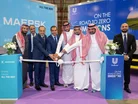
Maersk and Unilever are expanding their sustainability commitments with a new electric logistics solution in Saudi Arabia.
The companies are working together to integrate electric vehicles (EVs) into their operations as part of a broader effort to decarbonise logistics networks and meet ambitious climate targets.
Their collaboration is rooted in Saudi Vision 2030, a national strategy focused on transforming the Kingdom’s economy, society and infrastructure with sustainability at its core.
Both companies already have global environmental goals in place, with a shared focus on cutting greenhouse gas (GHG) emissions throughout the supply chain. Maersk is aiming for net-zero GHG emissions by 2040, while Unilever has committed to net zero across its value chain by 2039.

Scaling low-emission logistics across Saudi Arabia
Maersk, an integrated logistics company operating worldwide, is expanding low-emission trucking across global markets including the US, Chile, China and India. Its roadmap to net zero is supported by multiple strategies, including the deployment of new vessels, the use of lower-emission fuels and the rollout of EVs in ground transportation.
In Saudi Arabia, Maersk and Unilever are now working together to roll out an electric van that will support retail logistics operations for the BinDawood Group, a key retail partner for Unilever. Operating within a 50km radius, the van will travel up to 3,500km each month, supporting Unilever’s retail fulfilment needs while reducing operational emissions.
Ahmed Elesseily, Managing Director at Maersk Saudi Arabia, says: "As electric vehicle technology advances and charging infrastructure expands across Saudi Arabia, we're seeing more opportunities to deploy emission-free trucks in place of diesel units."
"We're proud to partner with forward-thinking customers like Unilever, who are committed to decarbonising logistics solutions that deliver value throughout their supply chain."
For Unilever, logistics decarbonisation is an essential part of its wider sustainability agenda, which includes reducing logistics-related emissions by 50% by 2030. The company is also adopting practices like solar-powered warehousing and intermodal transport to further reduce emissions.
Maersk and Unilever are also jointly operating a fulfilment centre at Maersk's Logistics Park in Jeddah, delivering a 5% emissions reduction. The park features a 64,000sqm rooftop solar plant and uses ammonia-based cooling systems and seawater in place of potable water, further supporting operational sustainability.
Supporting national sustainability priorities
Saudi Vision 2030 is Saudi Arabia’s long-term strategic framework to diversify its economy and reduce dependence on oil. It includes clear environmental objectives such as reducing national carbon emissions by 278m tonnes annually and increasing renewable energy’s share of electricity generation to 50%.
By deploying EVs and other clean logistics technologies, Maersk and Unilever are supporting the country’s targets while demonstrating what commercial decarbonisation can look like in practice. The new EV deployment is designed to fit seamlessly into Saudi Arabia’s growing EV infrastructure and reflects a practical approach to introducing clean transport solutions.
Ahmed Kadous, VP of Customer Operations Pakistan, Turkey, Arabia and Bangladesh at Unilever, says: "This is the first van deployment in our Saudi fleet, and it represents our commitment to reducing logistics-related emissions wherever feasible. This is another building block of our emission reduction plans in partnership with Maersk."
"The electric van, combined with solar energy charging infrastructure, means we practically reduce emissions by 100% compared to a conventional truck. We’re proud to introduce this innovation in Saudi Arabia, supporting Saudi Vision 2030 and joining global efforts. By improving efficiency and cutting emissions, we strengthen sustainability while delivering greater value to our customers."
Building supply chains fit for the future
Maersk’s broader supply chain decarbonisation efforts involve a growing portfolio of low-emission transport solutions and investments in infrastructure that support end-to-end logistics. These include alternative fuels, electrification and energy-efficient facilities.
Unilever continues to embed sustainability across its supply chain, from regenerative agriculture at the source to the prioritisation of renewable energy in manufacturing and warehousing. By working closely with logistics partners like Maersk, it strengthens the environmental impact of its value chain while supporting customer expectations on sustainable delivery.
The Maersk-Unilever collaboration offers a blueprint for other supply chain leaders looking to meet environmental targets through meaningful partnerships. With shared goals, aligned strategies and an understanding of Saudi Arabia’s evolving logistics infrastructure, the two companies are making electric logistics work at a practical, operational level.
Together, they show that decarbonising supply chains is not just an environmental goal but also a strategic business decision that adds value across the chain, from distribution to customer delivery.


Executives
Ahmed Elesseily
Managing Director
Ahmed Kadous
VP Customer Operations PTAB (Pakistan, Turkey, Arabia, & Bangladesh)