
Procurement's Role in $7bn Microsoft Data Centre Investment
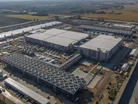
Microsoft is in the process of finalising the development of Fairwater, described by the company as the most powerful AI data centre globally.
Located in Mount Pleasant, Wisconsin, the initiative highlights a strategic procurement decision focused on enhancing computational capabilities while aligning with sustainability goals.
Construction is in its concluding stage and the facility is set to become operational by early 2026. A cash injection of US$3.3bn underscores Microsoft's commitment, with recruitment for full-time positions already under way to manage operations upon launch.
Further bolstering its investment, Microsoft has announced an additional US$4bn for a second facility in the state, elevating its total investment in Wisconsin to US$7bn+
AI-centric design
The Mount Pleasant facility is engineered to empower frontier AI models, housing vast numbers of NVIDIA GPUs in clustered formations.
These GPUs facilitate the training of AI models by performing extensive calculations in parallel, significantly boosting computational efficiency.
The interconnected network of fibre optic cables spans a length capable of encircling the earth four times, with the data centre achieving tenfold the performance of current supercomputers.
This infrastructure is designed to support accelerated R&D, positioning the facility as an innovative nucleus for advancements in medicine and science, consequently impacting procurement strategies and technological investments.
Microsoft emphasises the economic ripple effect within the local community through employment opportunities and new career paths in IT. Collaboration with Gateway Technical College has led to the creation of Wisconsin’s inaugural Datacenter Academy, aiming to cultivate a skilled workforce for future data centre operations.
Sustainability commitments
Sustainability takes precedence in this project, with more than 90% of the facility featuring a closed-loop liquid cooling system.
This method efficiently recycles cooling liquid, significantly lowering environmental impact due to reduced water consumption.
Complementing this are outside air cooling systems that use water sparingly during peak thermal demands. Despite the substantial hardware scale, anticipated water usage remains minimal, akin to a single restaurant’s annual consumption or a golf course’s weekly tally mid-summer.

To maintain energy equilibrium and shield local prices, Microsoft pre-emptively covers energy expenses, thereby preventing potential price hikes. Moreover, every kilowatt-hour of fossil-fuelled energy utilised is counterbalanced with carbon-free energy contributions to the grid.
A new 250MW solar venture in Portage County is in development to complement these centres, demonstrating sustainable procurement in energy resources. Collaborations with WE Energies aim to regulate energy transmission and consumption, safeguarding the grid's reliability.
Furthermore, ecological restoration throughout Racine and Kenosha counties is supported alongside the Root-Pike Watershed Initiative Network, showcasing Microsoft’s commitment to environmental stewardship and community relations.
Economic impact and skills development
At its peak, the construction phase engages over 3,000 workers from varied trades, demonstrating Microsoft's substantial investment in workforce development. Once operational, the initial data centre will employ approximately 500 full-time staff, expanding to around 800 with the second site.
Educational investments are integral, with plans to train over 1,000 students through the Datacenter Academy within five years. Microsoft has also augmented AI skills training across Wisconsin, partnering with the University of Wisconsin and other institutions to reach a broader demographic.
The establishment of the first manufacturing-oriented AI Co-Innovation Lab at the University of Wisconsin-Milwaukee further underpins these initiatives. This facility aids in developing AI-enhanced manufacturing solutions for companies like Regal Rexnord and Wiscon Products.
Broadband extension projects have improved connectivity for over 9,300 rural residents, illustrating Microsoft's commitment to technological advancements and digital equity.
Brad Smith, Microsoft's Vice Chair and President, reflects on the project’s alignment with both his personal connections to Mount Pleasant and the broader vision of pioneering American innovation.
He expresses that these centres not only celebrate Wisconsin’s industrial legacy but carve out a future-oriented path in AI and technological procurement.
“Mount Pleasant isn’t just becoming a hub for AI – it’s becoming a blueprint for how innovation can serve everyone,” he conveys, highlighting Microsoft’s dedication to community-conscious technological progress.

