Discussing the Future of Procurement Technology at PSC LIVE
Technology is advancing every day, as tools like AI redefine procurement and humanoid robotics enter the supply chain.
Procurement is being reshaped by global instability, increasing demand and the growing integration of AI, alongside other emerging technologies which are making processes more cost-efficient and more productive.
At Procurement and Supply Chain LIVE: The US Summit, leaders gathered to explore how technology is reshaping the sector and what the future holds.

The future of procurement technology
Historically, procurement has been a manual, heavily siloed industry, performed behind the scenes to drive cost savings. But, with growing instability it has seen procurement's role in developing business resilience.
With this, the demand for what procurement teams are expected to do has increased – but the budget has not. Instead, procurement leaders are expected to do more, without the additional workforce to meet this demand and still prioritising cost savings.
As a result, emerging technology has become a key driver of many day-to-day procurement functions. However, with increasing numbers of technology entering the sphere, it can be difficult to understand what adds value and what does not.
This technology is not a one-size-fits-all and the leading companies understand exactly where to implement it in order to unlock value and drive business efficiency.
Automation, analytics and digital platforms have risen as enablers of faster, smarter and more resilient supply chains, but only if they can be applied correctly.
AI-driven workflows can be used to remove friction by handling complexities of compliance and sourcing and allowing the procurement leader to focus on the customer.
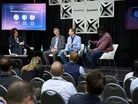
This level of value has redefined procurement. As such, leaders gathered on the Future of Procurement Technology panel, in association with Ivalua, in Chicago.
Mitigating risk
According to Ivalua, 73% of UK businesses anticipate an intensifying of geopolitical risk over the next 12 months. Despite this, 62% of organisations state that their supply chains are currently unable to cope with these pressures. The inability to anticipate these events and prevent risk is directly eroding the bottom line.
Businesses are not prepared for shocks, with a fragility lingering across business strategy. Much of this shock comes as a result of fragmentation across organisations, with outdated ERP platforms, sourcing tools and third-party databases meaning that inconsistencies are common and data sharing is slow-paced.
Emerging technology aims to reduce this fragmentation and inconsistent reporting. AI can be applied to onboarding and other manual processes in order to automatically scan documents and flag inconsistencies. This reduces the risk of manual error, which is particularly disruptive in repetitive tasks. Following on the application of AI, leading companies still use human expertise to cast the final decision.
"The future of technology, I think is around AI," explains Doug Keeley, Product Marketing Director of Ivalua.
"There's a really incredible future for AI to work together with human in a way that we amplify the expertise of the people that are working with humans. I don't want to replace people. That's not what we're trying to do.
"What we want to do is give people a workforce of agents that will help you be better, help you make better decisions, amplify the people that are part of your procurement organisation."
Automation and onboarding
Across procurement, the utilisation of automation has been particularly useful with onboarding. What was once a back-and-forth affair, can now be made simple and effective through automation. Suppliers simply upload their documentation and the automation scans through it all.
When data previously changed, threads could get tangled, leading to blind spots and errors.
Now, automation spots when an update has occurred and continuously monitors to ensure that no information is missed. This helps procurement leaders to navigate change and disruption at a faster pace, reducing costs and productivity losses significantly.
"In the past, it used to be once you onboard a vendor, you monitor them there for the risk, you evaluate them for that, and it almost becomes like back of mind," says Trevor Lunga, Head of Global Procurement and Vendor Management at Lightspeed Commerce.
"But now we're able to, with automation, have a continuous assessment and monitoring of risk. Not only that, we're able to then have procurement at the seed, mobilising the key stakeholders in how quickly we respond to that.
"The risk type changes, but how we respond to it and act on it is what we can play a role in doing. And that's kind of how I look at the area of risk as far as that's concerned."
Legacy systems were not built with the level of volatility that supply chains are now currently facing.
New technology, however, is designed to identify risks more, with integration of internal and external systems. With the likes of CSR, financial risk and compliance data integrated, organisations can automate due diligence, leading to better onboarding, reduced duplications and accurate regulatory compliance.
Unlocking value
Many solutions offer excellence when solving one specific problem, but it can leave another issue less managed. With technology emerging at such a rapid pace, many organisations have invested too quickly in too much technology, without having applied it correctly or waited to see where it can unlock true value.
As a result, businesses have sunk more money into inefficient technology which is supposed to introduce cost savings.
Technology is starting to enter that adoption period where it has already proven its value, therefore leaders are seeing a greater return on investment (ROI).
However, there is still a way to go with knowing where technology can be best placed for the most optimal outcome for each individual business.
"I think that the highest ROI is going to be the technologies that can bridge between software solutions that are solving business problems," adds David Wild, Global VP, Digital Procurement at Schneider Electric.
"Looking at the business capabilities and understanding this piece of software here and this piece of software here, if they could talk to each other better, we could deliver more value.
"Now, full suite providers are going to tell you that you can replace everything with one suite, but we all know that the lift and shift cost is huge. It's a lot of barrier to entry there.
"I think it's going to be opportunistic – if Ivalua comes out with a cool tool that adds a lot of value and you're already in their ecosystem or you're making a decision to go on board with them, partner with them."
This panel was clear that the human workforce is still vital.
The future of procurement technology is not to replace human workers, but to ease their way in order to hit these productivity and resilience targets. Though caution should be taken when understanding when to utilise this technology, leaders agree that it can unlock value and it will make procurement operate more efficiently.
Company portals



Executives
David Wild
Global Vice President - Digital Procurement
Doug Keeley
Director of Product Marketing
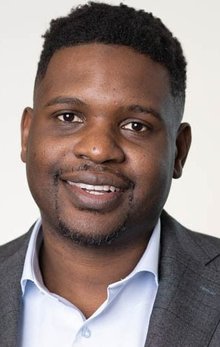
Trevor Lunga
Head of Procurement