FedEx: Lessons in Strategic SAF Procurement

In January 2025, FedEx expanded its sustainable aviation fuel (SAF) use across US airports, signalling important shifts in procurement strategies for organisations seeking to reduce carbon emissions.
The logistics giant has added Dallas Fort Worth International Airport (DFW) and John F. Kennedy International Airport (JFK) to its SAF agreements, bringing its total to five major US airports by the end of 2025.
The expansion represents a significant procurement commitment, with FedEx securing the equivalent of five million gallons of neat SAF across its airport agreements.
However, the company's experience also reveals the complexities procurement teams face when attempting to source sustainable alternatives at scale, particularly as global SAF production growth is predicted to slow in 2026 according to the International Air Transport Association (IATA).

Strategic partnerships in SAF procurement
At DFW and JFK, FedEx has partnered with World Fuel Services, a fuel provider offering solutions in the aviation sector. Through this agreement, FedEx will receive a total of two million neat gallons of SAF across both airports, delivered as a minimum 30% blend.
The partnership demonstrates how procurement teams can leverage supplier relationships to access emerging sustainable materials within existing distribution networks. This approach allows organisations to integrate sustainable alternatives without completely overhauling existing supply chain infrastructure.
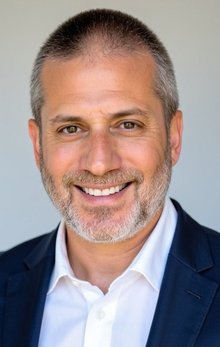
Bradley Hurwitz, Senior Vice President, Supply & Trading at World Fuel Services, said in a company statement: "World Fuel is committed to expanding the availability of SAF and meeting the sustainability needs of our customers.
"FedEx's purchase at DFW and JFK demonstrates how our aviation fuel distribution platform enables carriers to access lower-carbon fuel options with a robust supply chain designed for flexibility and scale."
In December 2025, FedEx became the first airline to begin purchasing SAF at DFW outside of pilot projects, potentially establishing procurement precedents for other organisations operating at the airport.
Supply chain constraints affecting procurement
The broader SAF market presents significant procurement challenges that extend beyond individual purchasing agreements. Despite industry-wide sustainability goals pushing demand for SAF, the growth rate of global SAF production is predicted to slow in 2026.
Mandates introduced in the EU and the UK have failed to accelerate adoption, with procurement teams facing price spikes and limited SAF capacity. These regulatory frameworks, whilst well-intentioned, have exposed the fundamental supply-demand imbalance in the sustainable fuel market.
Karen Blanks Ellis, Chief Sustainability Officer and Vice President of Environmental Affairs at FedEx, said in a company statement: "When SAF policy focuses on the air carriers and demand side of the equation, there is a risk of not concurrently building up the actual alternative fuel supply needed to comply and make progress on emissions reductions goals.
"To meet the industry's demand for SAF – both mandated and voluntary – concerted support and encouragement for increased SAF production must be part of the policy framework."
For procurement professionals, this mismatch between supply and demand could mean continued price volatility and difficulty securing sufficient volumes to meet organisational sustainability targets.
Procurement's role in emissions targets
FedEx's SAF procurement strategy supports the company's wider sustainability goals, notably its overall target to achieve carbon neutral operations globally by 2040. The company aims to improve its efficiency through aircraft modernisation and fuel savings initiatives, alongside increased procurement of alternative fuels to power its global fleet of more than 700 aircraft.
Karen says: "Expanding SAF use by FedEx to include our operations at DFW and JFK caps off a successful year of SAF deployments coast-to-coast. While we know there remains work ahead to procure more SAF and to continue to educate our stakeholders about how alternative fuels fit into our overall aviation sustainability strategy, we are proud of our steps forward in 2025."
FedEx has achieved its goal to reduce aircraft emissions intensity by 30% from a 2005 baseline in fiscal 2024, and has since expanded this target to a 40% reduction by 2034. These targets demonstrate how procurement decisions directly impact long-term sustainability performance.
Company portals

Executives
Brad Hurwitz
SVP, Supply & Trading
Karen Blanks Ellis
Chief Sustainability Officer & VP of Environmental Affairs