
How the EU is Supporting Critical Minerals Procurement
The European Commission has launched a platform to aggregate demand for raw materials and boost diversification. It will work as the first port of call for buyers and suppliers under the Raw Materials Mechanism.
Through this platform, buyers of critical raw materials will be able to aggregate demand and connect with suppliers, financial institutions and storage providers.

Mitigating geopolitical risk
The Raw Materials Mechanism is part of the EU's efforts to diversify supplies of critical raw materials, building on the EU Energy Platform.
Because industry in the EU remains heavily dependent on a limited number of third-country suppliers, the initiative aims to reduce vulnerabilities and strengthen economic security in the face of growing geopolitical risks by giving visibility to alternative sources.
For companies, particularly smaller ones, it will allow them to build partnerships beyond their existing networks.
With a focus on strategic sectors such as rare earths, defence and battery materials, the voluntary and market-based tool complements existing commercial relationships without intervening in negotiations. Companies interested in taking part in this first round can register by the end of April.
Strengthening industrial resilience
The Raw Materials Mechanism serves as a strategic bridge, linking European off-takers with the suppliers and storage solutions essential for a resilient industrial future.
By facilitating demand aggregation and joint purchasing, the mechanism bolsters Europe’s diversification and global competitiveness while sending a definitive message that the EU is committed to securing the critical building blocks of its economy.
The mechanism focuses on two primary objectives: providing immediate options for companies to diversify their supply chains and accelerating the development of new raw material projects within the Union.
This platform is designed to benefit a broad spectrum of sectors, from green and digital technologies to aerospace and defence, by connecting them with new suppliers and investment partners.
Structured procurement rounds
The European Commission organises these activities into structured rounds. In Diversification Rounds, off-takers can aggregate demand to secure immediate supply from new sources. During Project Development Rounds, any strategic raw materials project established in the EU can find the commercial partners necessary for growth.
Additionally, the mechanism facilitates connections with storage providers to help industries manage their own stocks and physical reserves. Once a round concludes, results are shared with all participants, though the European Commission remains entirely neutral and does not participate in any private commercial negotiations.
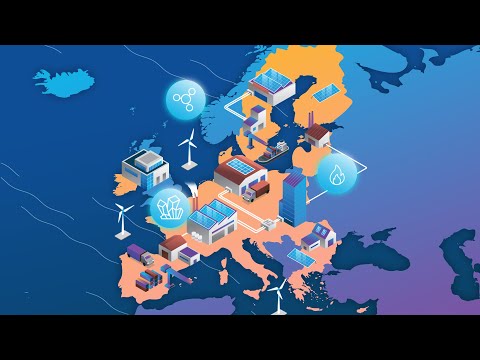
The EU Energy and Raw Materials Platform is a flagship European Commission initiative designed to empower industry through the strategic sourcing of essential commodities.
By centralising the procurement and development of energy products and raw materials, the platform directly enhances European competitiveness, accelerates decarbonisation, and ensures a more diversified supply chain for the future.
This comprehensive framework operates through specialised mechanisms tailored to the specific needs of different commodity sectors. The Hydrogen Mechanism focuses on market creation for hydrogen and its derivatives, such as ammonia, methanol and eSAF, to drive the decarbonisation of heavy-duty transport and hard-to-abate industrial sectors.
Simultaneously, the Raw Materials Mechanism works to secure the critical minerals necessary for Europe's industrial resilience by supporting strategic projects and stabilising supply chains. Complementing these efforts, the Gas Mechanism facilitates joint purchasing and the growth of the biomethane market to ensure energy security and affordability while supporting a sustainable transition.