DHL & Henkel: A Low-Emissions Shipping Partnership
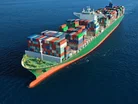
Following a successful collaboration in 2024, DHL Global Forwarding and Henkel are set to advance their decarbonisation efforts in logistics by leveraging sustainable marine fuel (SMF).
The shift from fossil fuels signifies DHL's commitment to demonstrating the achievability of decarbonising supply chains within the maritime sector.
A logistics partnership
DHL Global Forwarding, a division of the logistics leader DHL, operates with a network of over 31,000 freight forwarding professionals in more than 190 countries.
This global footprint facilitates streamlined and resilient trade flows across supply chains by deploying specialised solutions and technological innovations.
The company maintains a focus on sustainable practices, targeting net zero by 2050, as exemplified by its collaboration with manufacturing titan Henkel.
Henkel remains committed to advancing new solutions for sustainable development across its chemical and consumer goods sectors.
In 2024, DHL and Henkel piloted SMF for the shipping of Henkel's goods, a move now being expanded to support key environmental objectives.
"This expansion of our partnership is another milestone in our joint decarbonisation journey," says Amanda Rasmussen, Chief Commercial Officer at DHL Global Forwarding.
"By combining Henkel's ambitious climate strategy with our sustainable logistics solutions, we are demonstrating that progress toward decarbonising supply chains is possible today. We hope this agreement will inspire other companies to transition to low-emission transportation services using sustainable marine fuel."
Fuel supply and demand
To minimise greenhouse gas (GHG) emissions, DHL and Henkel are optimising transport modes and consolidating shipments.
The enhanced cooperation entails ocean carriers employing waste- and residues-based maritime fuels (SMF) on DHL's behalf.
Through the Book & Claim mechanism, DHL assigns these emissions reductions to Henkel, enabling the use of low-emission fuels in lieu of conventional options within its logistics network, thereby passing on the environmental benefits to its customers.
This process operates like a registry system: DHL funds the fuel for another party and claims the emissions reduction despite not utilising the sustainable fuel directly.
The procedure includes:
- Book: DHL purchases sustainable fuel from a supplier.
- Supply: The acquired fuel volume enters a storage facility at a port or airport.
- Delivery: The fuel is loaded into a vessel or aircraft (typically not a DHL vehicle).
- Claim: DHL claims the environmental benefits as the financier of the sustainable fuel product, benefits that can then be extended to DHL customers.
Henkel is set to integrate SMF into most of its ocean freight via DHL, expanding upon earlier initiatives.
The collective efforts of DHL Global Forwarding and Henkel underscore the escalating demand for sustainable logistics solutions while also bolstering the sustainable fuel market.
Building sustainable supply chains
DHL's GoGreen Plus initiative is designed to curtail carbon emissions for consumers and businesses alike by employing sustainable fuel.
By incorporating low-carbon technology and sustainable fuels, DHL offers comprehensive supply chain decarbonisation solutions, enhanced further through the Book & Claim model.
"Working with DHL Global Forwarding on sustainable transport solutions is an important part of our strategy to reduce emissions within our logistics processes," said Ondřej Slezáček, Global Category Manager Sea & Air Freight at Henkel.
"Simultaneously, it helps accelerate the overall transition to low-emission logistics in our industry."
This agreement anticipates the coverage of 9,000 TEUs of ocean freight by 2025 under the GoGreen Plus scheme.
Utilising SMF is projected to cut GHG emissions by about 4,700 tonnes of CO₂e, equating to an 85% reduction in GHG emissions on principal hauls compared to traditional marine fuel.
DHL is actively establishing a robust market for SMF, showcasing effective methods for integrating sustainability into maritime supply chains.