Everything From Day One of Ivalua NOW 2026
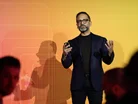
The global economy has shifted and the halls of the Carrousel du Louvre are buzzing with the implications. Day One of Ivalua NOW 2026 opened against a backdrop of rising protectionism and market fragmentation, signalling a "new phase" where the traditional procurement playbook no longer applies.
With more than 1,500 leaders in attendance, today was about more than just managing spend; it was about survival and sovereignty. As speakers took to the stage, the message was clear: those who successfully navigate these "New Horizons" will be the ones who stop viewing uncertainty as a hurdle and start using it as a catalyst for organisational resilience.
The first day of the event allowed Ivalua to talk with customers about their pressing concerns regarding their S2P platform and its latest developments. It also gave a platform for some of the most vital topics to be discussed by attendees in a range of sessions, such as its connected procurement panel, which looked at how companies can bring people, AI agents, data and processes together.

Building a stable foundation for AI agents
Ivalua’s Vishal Patel, SVP, Product & Customer Marketing, Thomas Le Ponner, VP, Global Head of Innovation Success and Ian Dawson, Sr Solution Consultant, discussed the next evolution of procurement, looking at how humans and agents can work seamlessly together, data fuels action and every process is intelligently connected.
Vishal highlights that the velocity of AI innovation is staggering, doubling in capacity every few months. However, successful adoption rests on more than just speed; it requires a stable foundation. Vishal warns against "putting a nice, shiny tool on a foundation that is cracked," referring to the data silos and fragmented systems that plague many organisations.
Beyond data, the transition requires a cultural shift in human skills. As traditional execution tasks decline, Vishal anticipates a rise in roles like the "Agent Portfolio Manager," responsible for overseeing an AI’s lifecycle. Ultimately, he argues that effective enterprise AI must integrate three core pillars: a unified "system of record," an orchestrating "system of action" and a robust "system of governance" to ensure transparency and control.
Ian explored AI use cases which Ivalua is seeing its customers use, such as co-pilots powered by its Iva agent. These help to understand supplier due diligence, ensuring compliance with standards and allowing users to obtain specific data as quickly as possible, while presenting it in an easy to understand method and allowing the user to ask questions to ensure all necessary information is obtained.
Bridging the collaboration gap in direct materials
Another session looked at how leaders connect people, data and decisions to transform direct materials sourcing. The panel featured the Ivalua trio of Marija Saric, Senior Solution Consultant, Olivier Dupuy, Senior Director, Product Management and Douglas Keeley, Director, Product Marketing.
The panel discussed how leading organisations are using modern technology to unify teams, data and decision-making across the direct materials lifecycle, from design to delivery. It was through connected processes that attendees could see how they enable faster innovation, stronger supplier collaboration and smarter sourcing decisions.
The session highlighted the "collaboration gap" that often exists between Engineering’s PLM systems and Production’s ERP environments. Douglas noted that this manual "middle ground", often managed via fragmented emails and spreadsheets, is where critical data is lost. By using Ivalua as a digital bridge, organisations can unify these siloed processes into a single, cohesive lifecycle.
Marija demonstrated how Generative AI and "agent-in-the-loop" workflows are transforming category management. Rather than spending days on manual research, buyers can now use AI assistants to draft Porter’s Five Forces analyses and identify supply disruptions with cited, hallucination-free data. This intelligence is further bolstered by deep-tier integration with partners like The Smart Cube, providing granular, forward-looking cost drivers directly within the sourcing event.
Olivier unveiled a roadmap centred on Autonomous Sourcing. He detailed a future where AI "agents" act on behalf of the buyer to discover new suppliers and provide real-time benchmarking feedback to bidders. Coupled with advanced BOM (Bill of Materials) costing and "should-cost" modelling, these innovations ensure that procurement moves from a reactive back-office function to a proactive driver of high-margin product launches.
Orchestrating risk in a state of constant crisis
One of the final sessions of the day looked at the increasingly volatile world of global risk, featuring Ivalua’s Jarrod McAdoo, Simone Smits, Senior Solution Consultant and Revati Dhand, Associate Product Manager. The panel challenged the industry’s traditional, "checkers-style" approach to risk management.
Jarrod opened with a provocative reality check: the "Black Swan event", once defined as a rare, unpredictable occurrence, has been replaced by a state of "constant crisis." From geopolitical shifts to the complexities of the EUDR (European Union Deforestation Regulation), Jarrod argued that we are now playing "3D chess" with supply chains. He warned against the "mask" of Tier 1 visibility, noting that the most dangerous risks are often hidden deep within sub-tiers.
To demonstrate how organisations can move from a "poverty of insights" to meaningful action, Simone showcased Ivalua’s Risk Center. The demonstration featured IVA, an AI-powered assistant that doesn't just report a risk score; it validates documents. In a standout moment, Simone showed how IVA’s Document Validator can read a CSR report, verify its authenticity and automatically update a supplier’s certification status, eliminating manual approval bottlenecks. By linking these risks directly to active contracts and invoices, the platform ensures that a "medium risk" signal isn't just a number, but a prompt for immediate mitigation.
Finally, Revathi laid out a vision for the future of risk orchestration. She dismantled the myth that "more data equals better risk management," pointing out that excessive data often leads to "analysis paralysis." Instead, she proposed a tiered orchestration strategy:
- Prospects: Fast, low-cost basic verification.
- Core suppliers: Targeted scrutiny of banking and light ESG data.
- Strategic partners: "All-in" continuous monitoring and deep-tier mapping.
Revathi’s roadmap for a Modular Risk Evaluation Engine promises to give leaders the ultimate flexibility, allowing them to build custom risk models that align with their specific procurement strategy rather than being bound by a single provider’s logic.
Company portals
Executives
Vishal Patel
SVP Product & Customer Marketing