
REWE West & Circus: The Future of Retail Food Tech?
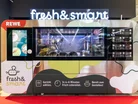
German supermarket chain REWE West is launching a new in-store experience in partnership with the global AI and robotics company, Circus SE.
The collaboration introduces the 'Fresh & Smart' concept which centres around the Circus CA-1, an autonomous food production robot.
This initiative could signal a major change in how retailers procure and integrate technology to enhance efficiency and manage operational costs.
The first of these automated systems has been installed in a store in Düsseldorf Heerdt, creating a new model for food service within a supermarket setting.
The partnership sees the full integration of AI-powered autonomous cooking robots within an established retail environment.
According to Circus, the CA-1 robot requires only one hour of human input per day and can reduce labour costs by as much as 95% while operating on a 24-hour basis.

Strategic partnerships in retail automation
The venture between REWE West and Circus highlights a growing trend of retailers forming strategic partnerships to deploy advanced automation.
By creating the 'Fresh & Smart' in-store market REWE West is testing a new service model that utilises robotics to deliver fresh meals efficiently.
This approach to innovation through collaboration is a model that other retailers may look to emulate as they seek to meet changing consumer demands for convenience and speed. Plans are already in place to expand this concept into more locations with several sites reportedly under construction.
Lars Klein, Chairman of the Management Board of REWE Region West, says: “With the use of fully autonomous AI robots we are showing what innovation in food retail truly means today: being close to customer needs leading in technology and maintaining the highest standards of quality.
Evaluating operational efficiencies
The business case for integrating systems like the CA-1 robot is built on operational improvements.
The technology is designed for high-volume output with the capacity to prepare up to 500 dishes per load with individual meals ready in three to four minutes. This level of productivity addresses the challenge of meeting customer demand during peak hours without corresponding increases in labour.
The system incorporates several features aimed at optimising performance and minimising maintenance including:
- An automated self-cleaning system to ensure hygiene.
- Energy-efficient induction pots for precise and rapid heating.
- Robotic arms that manage the entire process from dispensing to plating.
- AI-driven monitoring for quality control and operational oversight.
- Heated slots for customer collection ensuring meals remain at an optimal temperature.
For businesses the compact design of the CA-1 offers space optimisation while its 24/7 operational capability provides a constant service.
The potential to reduce operational costs by 95% makes it a compelling consideration for procurement executives, where it could simplify the provision of high-quality affordable meals.
The future of procurement and physical AI
The deployment of autonomous robotics in a public-facing retail setting is a notable development.
It joins other technological advancements in the sector such as the app-based sensor systems, or how Walmart has introduced AI agents to streamline the shopping experience for customers, using agentic AI to help scan for risk or optimise delivery routes.
Waitrose introduced an AI smart trolley to increase customer efficiency, with automatic scanning and visible cost total.
The launch of 'Fresh & Smart' represents a tangible application of physical AI in a retail context merging robotics and intelligent software to create a new customer experience.
“Our launch with REWE marks the first real-world deployment of physical AI applied in retail environments,” says Nikolas Bullwinkel CEO and Founder of Circus.
“With ‘Fresh & Smart’ autonomous robotics becomes part of everyday life – enabling fresh high-quality food access through technology that’s both scalable and sustainable."
This move could indicate a future where procurement strategies increasingly focus on acquiring scalable and sustainable technology solutions that can be integrated directly into customer-facing operations.
The success of this partnership may encourage other retailers to explore how physical AI and robotics can be leveraged to innovate their service offerings and operational models.
Company portals

Executives

Lars Klein
Chairman of the Management Board REWE WEST

Nikolas Bullwinkel
Founder & CEO