CIPS and RS: the Procurement Role in Business Resilience

Following the instability throughout 2025, leaders have been altering their supply chain strategy in order to be more resilient.
Much of that is in the hands of procurement leaders, as they work to ensure they are driving sustainable and smart sourcing.
CIPS and RS have collaborated on 'Uncertainty Driving Efficiency', the 2026 Indirect Procurement Report, exploring the current challenges procurement professionals are facing and how they are managing them.

Building resilience
Over the last few years, procurement strategy has shifted in response to the growing pressures teams are facing around the world. As supply chains have been constantly reshaping under global volatility, procurement leaders need to explore responsible sourcing in order to build resilience.
This comes at a time where there is a growing demand for social and environmental responsibility, with more consumers prioritising brands which are demonstrating social consciousness.
As a result, procurement leaders are turning towards sourcing from socially and environmentally responsible suppliers, in order to manage future brand damage and build resilience during times of volatility.
In the latest Indirect Procurement Report, CIPS and RS explore how challenges for the procurement industry have shifted and how those challenges have created strong and modern strategies.
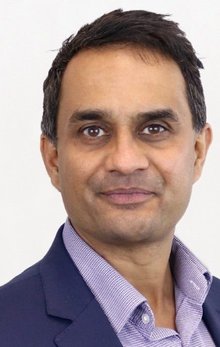
“It’s more important than ever for these professionals to be engaged: these are very challenging times for the profession with political instability, shifting tariffs and fragile global supply chains," explains Raj Patel, Managing Director for the UK&I at RS.
"This has all created an environment where certainty can no longer be assumed. These same pressures are showing up sharply in indirect procurement, where teams are being asked to deliver cost control, continuity and compliance in shifting conditions.”
All supply chain, sustainability, Scope 3 and net zero leaders should attend:
- Procurement and Supply Chain LIVE: The Net Zero Summit - QEII Centre, London, March 4-5
- Procurement and Supply Chain LIVE: The US Summit - Navy Pier, Chicago, April 21-22
Co-located with Sustainability LIVE, these events brings together CSCOs, CSOs and senior decision-makers at a moment when sustainability, supply chains and commercial performance are increasingly interconnected.
Tickets can be booked online today for The Net Zero Summit and The US Summit. Group discounts available.
Procurement concerns
Businesses around the world are being told they need to increase resilience, deliver lower costs and be more strategic in an ever-changing environment. The external and internal pressures are shaping the role of indirect procurement around the world, with respondents demonstrating how leaders are responding to these changes.
Main concerns include:
- Inflation and higher costs at 68%
- Managing risk in the supply chain at 50%
- Supply chain disruption, with 47% respondents citing this
- Global political uncertainty at 47%
This demonstrates how geopolitics, cost and continuity have come together, with procurement leaders now having to deal with issues that go beyond supplier negotiation.
Now, they are considering trade policy and national politics. Procurement and supply chain leaders are responsible for navigating these issues, which adds pressure to these teams but also provides them with structural recognition.
Tariff pressures and trade friction are now driving change, with organisations having to mitigate impact of higher costs alongside inflation. In response, 65% of respondents are reviewing their supply chain and location of suppliers, exploring whether there needs to be changes, diversification or localisation strategies implemented. The other tactic involves forming new deals, with 57% stating they are re-negotiating existing contracts.

The sustainable strategy
As the demand for sustainable operations grow alongside the pressure for cost savings, procurement leaders are having to strategically alter purchasing behaviour, prioritising sustainable measures which create more cost savings or pay back faster.
Teams are no longer willing to pay premium costs for sustainable products which will not create cost savings sooner - with 53% of MRO professionals saying they would pay more, down from 62% the year prior.
47% of respondents said that procurement teams are making more sustainable choices, or have been prioritising this switch, in the last year. This comes with smarter choices, such as prioritising waste recycling (74%), reduced energy usage (60%), renewable energy (60%), energy management (59%) and reduced waste to landfill (57%).
ESG implementation is being prioritised when it can offer operational efficiency, as well as resource and cost reduction, showing the procurement leaders are having to weigh up each change more strategically.
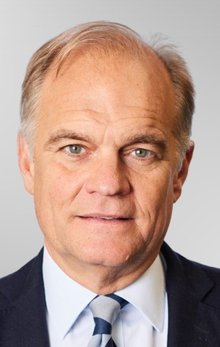
"Climate change is, of course, the most significant risk. While 'greenhushing' has become more prevalent over the past year – with companies opting not to promote their ESG initiatives - procurement and supply chain professionals are still actively pursuing sustainable solutions," explains Ben Farrell, Chief Executive Officer at CIPS.
"Amid these competing forces, effective procurement and supply chain professionals strike smart balances.
"They have the skills to find cost reductions while also reducing carbon emissions. They know how to consolidate their supplier base while also mitigating risks. Ultimately, the job of the procurement and supply chain professional is to ensure security of supply; the best are able to achieve this by remaining flexible to short-term opportunities."
Shifts in control
The changing trends have created a significant shift within the MRO sector, with organisations using less suppliers, spending less and processing orders at a lower internal cost. Despite this, many teams do not know their internal cost.
This is because of an increase in digitisation. There are less manual touchpoints and an increase in automated approvals for repeat items. However, larger teams are relying too much on these digital systems and as a result, they have less visibility into cost (35%) than small (38%) and medium-sized (43%) organisations.
Organisations are changing how their interact with suppliers, with businesses around the world reducing their supplier base. With fewer suppliers, there is more control over safety standards, contractual obligations and ESG requirements.
Procurement's influence is rising, with it becoming visibly a more central part of business resilience. As businesses navigate complex landscapes, it is procurement leaders' roles to make strategic and cost-effective choices to help mitigate risk.


Executives
Ben Farrell
Global Chief Executive Officer
Raj Patel
Managing Director