
CEO Summary: What Happened at PSC LIVE: The US Summit
Procurement functions are increasingly positioned at the centre of corporate sustainability delivery, as organisations shift from climate commitments to measurable action across their supply networks. With growing pressure to address Scope 3 emissions, manage supplier risks and embed resilience into sourcing strategies, procurement leaders are no longer simply facilitating sustainability initiatives, but driving them.
The Procurement & Supply Chain LIVE: The US Summit 2026 reflected this transition, bringing together senior procurement and supply chain decision-makers alongside sustainability professionals to address the operational realities of decarbonisation, supplier transparency and technology-enabled transformation. Held on 21–22 April 2026 at Navy Pier in Chicago, the event returned alongside Sustainability LIVE: The US Summit, creating a co-located forum where procurement strategy and sustainability execution converged.
As climate volatility and supply chain fragility intensify, procurement teams are tasked with translating environmental ambition into sourcing decisions, supplier engagement and performance management. The summit served as a key platform for organisations aiming to embed sustainability into procurement processes and core business strategy.

Procurement's role in sustainability execution
The programme highlighted how procurement has become central to innovation and sustainability delivery, particularly as organisations work to manage emissions beyond their direct operations.
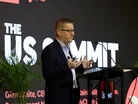
"Chicago for me is a city that didn't just build the legacy of the American supply chain, it invented it," said Glen White, CEO of BizClik, the publisher behind Procurement Magazine, in the opening statement.
Across more than 1,000 attendees, more than 50 speakers and 10 content tracks, the agenda addressed AI in procurement and sustainability, Scope 3 emissions management, circular economy design, water stewardship and global decarbonisation pathways. The summit was designed around action-oriented learning, with executive workshops focused on implementation rather than ambition.
Organisations such as PepsiCo, Walmart, Google, Dell Technologies, Vodafone, General Motors, Siemens, Coupa, Ivalua, EcoVadis and Ecolab are shaping discussions on how procurement teams can drive emissions reduction, improve supply chain transparency and integrate digital transformation into sourcing strategies. Leadership perspectives from HH Global, where Kathy Presto is Chief Procurement Officer, reinforced the importance of cross-functional collaboration in delivering measurable impact through procurement-led initiatives.
Insights were further supported by risk and analytics perspectives from RapidRatings, led by James Gellert, and supply chain transformation expertise from Aeva, represented by Abhijit Supekar, alongside planning and operations perspectives from Kraft Heinz, where Laís Piccinini Doi focused on Sales and Operations Planning (S&OP). Kate Heiny, Vice President of Sustainability at Booking Holdings, contributed perspectives on how procurement and sustainability functions are increasingly converging.
"We have managed to gather some of the world's leading thinkers, involving incredible speakers and very strong panels that include orchestrated subject matters," added Glen.
Scaling supplier engagement and innovation
Day one on the Sustainability Stage had a focus on system-wide transformation and scaling innovation. In a sponsored panel by Veritree, leaders at the Nature-Based Solutions panel explored the integration of reforestation, regenerative agriculture and ecosystem restoration into sourcing decisions as scalable climate strategies.
On the Procurement Stage, there was a heavy focus on spend management, emerging technologies in procurement, finance and payments. Leaders explored how businesses can do more with less spend, thanks to AI and data analytics.
"Technology and data is vital, AI can allow for our team to think, react and see around the corners ahead of time," Glen explained.
The day also featured the Sustainable Supply Chains panel at the Supply Chain Stage, where leaders examined responsible sourcing, circular practices and balancing efficiency with reducing environmental impact.
"I know the world needs to decarbonise and hopefully over the next two days we will listen to companies who aren't just saying they're going to do it with empty promises," added Glen.
"The people in the room today are talking about proof, they're talking about multi-year programmes through to 2030 and 2040."
Across these sessions, organisations such as EcoVadis, Google, Siemens and Dell Technologies contributed perspectives on measurement, accountability and how procurement teams can drive scalable climate action through supplier engagement and performance requirements.
Operational resilience and supplier visibility
Day two focused on operational execution and resource resilience, with leaders addressing water stewardship, circularity and supply chain integration.
"Resilience in our operations keeps the world turning; we are the infrastructure," stated Glen.
Sponsored by Ecolab, the Water Sustainability Summit panel addressed how teams can embed water stewardship and replenishment strategies into supplier selection and management processes, particularly in response to increasing global water stress.
Core themes of the day included transparency and collaboration across supply networks, reflecting findings such as those from Achilles, which showed that only a small proportion of organisations have full visibility across Tier 2 and Tier 3 suppliers. This highlighted a critical challenge for procurement functions seeking to manage sustainability risks and performance beyond direct supplier relationships.
Sessions explored how procurement and sustainability functions are increasingly converging, with companies like Vodafone, ABB, Deliveroo and Coupa emphasising the importance of supplier engagement, risk visibility and long-term resilience in sourcing strategies. The second day ultimately reinforced the shift from sustainability planning to sustained delivery, with procurement teams positioned as key enablers of this transition across global operations.