How BYD Harnessed Strategic Procurement To Become Top Seller
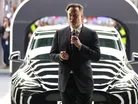
Move out of the way Tesla, there is a new top selling EV brand in Europe.
BYD has surpassed Tesla to position itself as Europe’s leading electric vehicle brand.
This achievement is underpinned by BYD’s strategic approach to procurement, which aligns well with the demands of Europe's diverse markets.

In July 2025, BYD registered 13,503 new vehicles in Europe, marking an impressive 225% increase in registrations compared to the previous year, while Tesla's registrations decreased by 40% to only 8,837 units during the same period.
This growth underscores BYD's adeptness in manoeuvring through the complex automotive supply chain and efficiently managing its resources to meet production demands.
BYD's rise gained momentum early in the year and was firmly established by April, when it began consistently surpassing Tesla in new registrations.
The company’s ability to maintain steady growth over both monthly and quarterly sales illustrates its robust procurement practices and agile supply chain management, reinforcing its market leadership in the region.
BYD’s procurement strategy
Founded in China, BYD rapidly rose to prominence as one of the world’s largest EV producers through a combination of cost-effective manufacturing, innovative technology and strategic market expansion.
Its procurement strategy in Europe involves focusing on affordability and local production, which has enabled BYD to navigate tariff challenges effectively and engage more directly with European consumers.
By producing models like the Dolphin Surf, Seal U and the Atto 3 SUV, BYD caters to the European market's preference for competitively priced, feature-oriented vehicles.
The company’s expanding dealership network is also a testament to its strategic procurement and distribution plans.
As Wang Chuanfu, BYD CEO, Chairman and President, says: “We have 110,000 engineers, which is BYD’s biggest asset.”
This reflects the company’s investment in skilled resources as part of its procurement strategy.
Tesla’s procurement challenges
Tesla, while still a major player in the EV sector, faces challenges that have impacted its market position in Europe.
Under the leadership of CEO Elon Musk, Tesla revolutionised the EV industry but now struggles with intensified competition and procurement inefficiencies.
Key factors affecting Tesla’s procurement strategy include the need to update vehicle models and adapt pricing strategies amidst increasing competition.
The resultant impact on their market share can be seen in their recent decline in European vehicle registrations.
Tesla's plans to launch a more affordable, mass-market EV towards the end of 2025 highlight its efforts to recalibrate its procurement strategy to regain momentum.
This endeavour will be crucial in revitalizing their presence in the robust and evolving European EV market.
Global procurement impacts on EV sales
The global EV market continues its upward trajectory, with more than 9.1 million units sold during the first half of 2025 – a 28% increase from the previous year.
China leads this charge with 5.5 million sales, while Europe follows closely with two million units sold, reflecting a 26% growth.
This expansion underscores the importance of agile and efficient procurement strategies for automakers navigating the increasingly competitive global landscape.
In Europe, markets in countries like Germany, the UK and Spain have exhibited significant annual growth, ranging from 30% to 85%.
These regions provide a fertile ground for brands like BYD and Tesla to innovate their procurement approaches, ensure cost efficiencies and bolster their production capacities to meet the growing demand.