Boeing-Korean Air US$36bn Deal Shapes Procurement Landscape
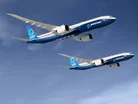
Boeing and Korean Air have announced a deal which will see the airline intent to buy 103 of Boeing's fuel-efficient family of aircraft in an effort to modernise its fleet and support the carrier's expansion within operations with Asiana Airlines over the next several years.
This marks Korean Air's largest-ever order and is Boeing's largest widebody order from an Asian carrier. When finalised, this deal will mark the first order from Korean Air for the 777-8F and will support an estimated 135,000 jobs across the United States.
The full details of the order will be put onto Boeing's Orders and Deliveries website once it has been completed.

Aircraft selection spans multiple Boeing families
The full list includes:
• 20: 777-9s
• 25: 787-10s
• 50: 737-10s
• 8: 777-8 Freighters
"This agreement with our long-standing partners, Boeing and GE, marks a pivotal moment for Korean Air," says Walter Cho, Chairman and CEO of Korean Air.
"Acquiring these next-generation aircraft is the core of our fleet modernisation strategy, delivering significant gains in fuel efficiency and enhancing the passenger experience across our global network.
"This investment is also a critical enabler for our future as a merged airline with Asiana, to ensure that our combined carrier is one of the most competitive airlines in the industry."
This deal was signed during a Korea-U.S. Business Roundtable "Partnership for a Manufacturing Renaissance," and presided over by Howard Lutnick, US Secretary of Commerce and Kim Jung-kwan, South Korea's Minister of Trade, Industry and Energy (MOTIE).
Korean Air's orders and commitments for Boeing aeroplanes in 2025 surpass 150 units, following the airline's incremental order in March for 20 777-9s and 20 787-10s.
"We are honoured to strengthen our partnership with Korean Air through this landmark agreement, which reflects the value and capabilities of Boeing's market-leading airplane family," adds Stephanie Pope, President and CEO of Boeing Commercial Airplanes.
"As Korean Air transitions to a larger unified carrier, we are committed to supporting the airline's growth with one of the world's most efficient fleets."
Operational efficiency soaring
Key facts:
The 777-9 can seat 426 passengers in a two-class configuration with a range of 13,510 km (7,295 nautical miles) and will reduce fuel use and emissions by 20% compared to the aeroplanes it will replace.
The 787-10 can carry up to 336 passengers with a range of 11,730 km (6,330 nautical miles).
The 737-10, the largest model in the 737 MAX family, can carry as many as 230 passengers with a range of up to 5,740 km (3,100 nautical miles), while reducing fuel use and emissions by 20% compared to the aeroplanes it replaces. The aeroplane's efficiency and flexibility will enable Korean Air to serve more passengers on more routes with the lowest cost per seat of any single-aisle aeroplane.
The 777-8 Freighter will be the world's largest and most capable twin-engine freighter, offering the highest payload and lowest operating cost per tonne of any large freighter and 30% better fuel efficiency and emissions than the aeroplanes it will replace.

The airline is already operating 108 Boeing aeroplanes, which includes 737s, 747s, 777s and 787s. With 72 Boeing jets on order, the carrier's order book will grow to 175 aeroplanes once the deal is finalised.
Korean Air's Aerospace Division is a key supplier for Boeing aircraft, manufacturing components for the 787 Dreamliner–including its distinctive raked wingtips–as well as parts for the 737 MAX, 767 and 777 aircraft families.
Boeing stands as a premier aerospace corporation and America's largest exporter, designing, building and maintaining commercial aircraft, defence systems and space technology for clients across more than 150 nations.
Through its domestic and international workforce alongside a vast supplier network, Boeing drives technological advancement, creates economic opportunities, promotes sustainability initiatives and generates positive community outcomes.
The company maintains an unwavering commitment to cultivating an organisational culture grounded in the fundamental principles of safety, quality and integrity.