How the Battery Boom Exposes Supply Chain Risks
Since 2020, the global deployment of lithium-ion batteries has increased sixfold. This rapid expansion has propelled the market’s value to a staggering US$150bn. However, behind this headline lies a more complex reality regarding technology that is fast reshaping the world of transport and energy across the globe.
According to a new study by the International Energy Agency (IEA), the growth in the battery market has largely been down to the boom in demand for electric vehicles. This sector accounts for more than 70% of deployment. In fact, a quarter of all the cars sold around the world in 2025 ran on batteries.
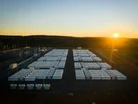
Elsewhere, grid-scale battery storage claimed around 15% of the market. This underlines how these devices have evolved from consumer gadgets into critical infrastructure for power systems.
That evolution is borne out in the data on portable electronics. A decade ago, devices such as laptops, tablets and smartphones accounted for nearly half of global battery production. Now, that share has collapsed to below 5%.

Market dynamics shift prices
What factors contribute to the surge in battery production in 2025? Falling costs certainly turbocharged adoption but might also reveal some uncomfortable truths about the overall sustainability of the market.
In 2025, the average price of batteries dropped by 8%, pushed down by efficient manufacturing and stiff competition between producers.
The price of grid storage systems fell to a third of the levels in 2020, which made batteries just as competitive as gas peaker plants in some markets. Nevertheless, these gains have come with some obvious geographical strings attached.
The IEA has found that Chinese battery packs sold for around 30% less than their American equivalents and were 35% cheaper than prices in Europe.
Meanwhile, lithium iron phosphate (LFP) batteries saw prices fall by more than 15%, compared with less than 5% for nickel-rich alternatives. The result is that LFP batteries now cost 40% less than nickel-manganese-cobalt options.
These command more than half of the EV market as well as more than 90% of grid storage globally. While this could be good news for procurement teams around the world, the IEA does warn that these low prices are unlikely to last. Many producers appear to be haemorrhaging money.
Supply chain dependency risks
The data exposes an uncomfortable dependency that policymakers are only beginning to reckon with. China manufactured considerably more than 80% of all batteries in 2025, while Chinese, Korean and Japanese firms accounted for virtually all global cell production in 2025.
The EU and US contributed modestly to the remainder, but both import most of their battery components from China. This could show that dependence runs deep.
Right now, nearly every battery powering electricity grids relies on China for at least one critical supply chain step. The IEA says that 70% of the EVs built outside of China contain batteries or components sourced from Chinese suppliers.
Furthermore, more than 90% of battery storage systems worldwide depend on LFP cells produced in China.
Beijing's export controls on key battery components, first introduced in 2023, have begun to expose these vulnerabilities by targeting the weakest links in non-Chinese supply chains.
Elsewhere, Korean producers are racing to build LFP production lines as an alternative. However, they are up against punishing competition from established Chinese manufacturers in an oversupplied market.
Production costs remain high
That said, production capabilities in Europe and the US have been increasing. Both territories have courted investments in the battery sector recently and used the booming EV sector to guarantee demand.
Still, the IEA finds that production costs in the EU and US can run as much as 50% higher than in China.
Matching the efficiency of Chinese manufacturing, where yields routinely exceed 90%, will require years of concerted investments. This is because new producers typically waste far more material than established ones.
This issue makes achieving a profit difficult until operations fully mature. The IEA notes that regions lacking industrial foundations will need patient capital and partnerships with experienced manufacturers as they look to become competitive on the global stage.