How AI is Transforming Risk Management
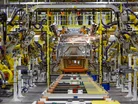
Jeff Morrison, SVP for Global Purchasing and Supply Chain, General Motors says supply chain management today is like making a jigsaw on a moving train.
He adds: "The puzzle itself is tricky, and the train's bumps and shakes make everything unpredictable.
"You have to adjust quickly and stay focused as new challenges pop up with every jolt so you can solve the puzzle before the train arrives at your stop."
Given the drastic way in which risks can suddenly appear and change a supply chain in a moment, being well prepared is more important than ever for companies which are operating across the world.
In order to stay as ahead as possible, companies have turned to AI for their risk management plans.
AI: the game-changer for risk management
AI strengthens intricate decision-making capabilities, making it a transformative force across all sectors. It enables laborious and lengthy tasks to be executed with greater efficiency and effectiveness, while providing leadership teams with unprecedented analytical depth.
Machine learning – an AI variant in which computer algorithms refine themselves through data-driven experience – assumes a growing significance in enterprise risk management.
AI enables the development of advanced tools for real-time behavioural and activity monitoring and analysis.
Because these systems adjust to evolving risk landscapes, they continuously improve organisational monitoring functions in domains including regulatory compliance and corporate governance.
They can also progress beyond early warning mechanisms to become early learning frameworks that proactively prevent threats from becoming real.
GEP published a report looking at how the technology is working and how it can help identify risks ahead of time.
The technologist points towards how AI can look at how suppliers perform in a range of different categories and give them a score. As teams review these metrics, they can recognise high-risk suppliers at an early stage, secure more favourable terms and execute vendor selection decisions grounded in data analysis.
GEP argues that this is significant because selecting dependable vendors constitutes a substantial portion of effective supplier risk management – calling it "half the job".
It adds: "It's not just about risk scores and performance data analysis. It's also the speed at which AI provides the analysis that makes all the difference. Equipped with large language models and machine learning algorithms, AI provides recommendations for supplier selection and associated risks much faster than traditional methods. This speed to value improves decision-making."
Jeff adds on AI: "Picture an expert companion on the train who can instantly read the puzzle and shine a light on bumps ahead that humans might miss. Because when you're trying to solve a puzzle before your stop, every second matters.
“That's what several AI-powered tools offer supply chain teams: rapid data analysis, pattern recognition and smart recommendations.
"It's easy to chase the hype with AI. But at GM, we view AI as a practical, transformative force. It is a competitive advantage to unlock enterprise-wide innovation and efficiencies up and down the value chain, from manufacturing and supply chain to the customer experience."

Disruption management is not optional
Sphera commissioned a survey of 200 Chief Procurement Officers (CPOs) and Chief Supply Chain Officers (CSCOs) across the United States and the United Kingdom. Conducted in September 2025, the research examined how often disruptions occur, what business impacts they create and how leaders are preparing to adapt their supply chains in an era of accelerating volatility.
The report points towards the geopolitical instability and tariffs to inflationary cost pressures, supplier insolvencies and rapidly shifting regulatory demands, procurement and supply chain leaders face daily challenges that threaten both continuity and competitiveness. One of the biggest takeaways was the fact that nearly three-quarters of companies are losing money to supplier disruption. The message is clear: disruption management is no longer optional - it is a financial necessity.
This report also showed the pressure teams are under, with 48.5% saying their supply chain risk decisions are questioned by the board weekly or monthly – while 46.5% face quarterly challenges.
These challenges are not surprising, as 73% of respondents say they have experienced some form of disruption in the last year. The same report found that AI is helping amid this rising challenge. The top benefits for AI-generated supplier risk summaries are fast operational decisions (31%), faster strategic decisions (29%) and speed/accuracy in under 60 seconds (24%).
The report adds: "Leaders see Gen AI as a tool that serves immediate operational agility and longer-term strategic planning. The emphasis on speed highlights the demand for risk intelligence that keeps pace with disruption, while the focus on strategic decision making and board defensibility shows that executives expect AI to elevate the quality and authority of decisions.
"AI solutions must deliver on two fronts simultaneously: compressing time-to-decision for day-to-day procurement moves and strengthening the defensibility of strategic choices at board level. Anything less risks falling short of executive expectations."
Sphera also published research on how 73% of supply chain leaders experienced supplier disruptions in the past 12 months, and the majority saw those disruptions negatively impact their bottom line.
The revenue impact of supply chain risk is a widespread issue: almost one in four respondents (23%) reported significant revenue or cost losses and an additional 50% acknowledged minor losses.
Leadership teams view artificial intelligence as an essential tool for bridging the divide between strategic planning and practical implementation. Survey participants identified AI-generated supplier risk summaries as crucial for accelerating operational decisions (31%), speeding up strategic choices (29%) and delivering rapid, accurate insights in under 60 seconds (24%). Respondents clearly outlined board expectations regarding returns on AI investment:
- Cost savings and cost avoidance – 28%
- Revenue protection from disruption – 24%
- Top-line revenue growth – 21%.
“The world is going through a reset in supply chain strategy,” says Paul Marushka, CEO and president at Sphera.
“The linear model of stretching supply chains globally to maximise efficiency and lower costs is going away. Trade restrictions, export controls and geopolitical disruption around the world continue to change the game. Firms require an agile, segmented and geographically aligned approach that builds in resilient sourcing strategies concurrently to balance risk.”
GM's digital toolbelt
For General Motors, the semiconductor supply chain crisis of the early 2020s permanently reshaped the global auto manufacturing landscape.
Jeff outlined how this reshaped how the company works: "In the depths of that crisis, our supply chain team dug in and rose to the challenge. The process taught us many things, but foremost among them was the undeniable need for deeper insights into our vulnerabilities and a stronger capability to anticipate, mitigate and respond to disruptions effectively."
General Motors has formed a digital supply chain toolset to anticipate and swiftly react to both disruptions for itself and suppliers. These include:
Risk Intelligence: Using the power of AI and machine learning, this tool classifies, summarises and tags thousands of daily public posts to anticipate risk in GM's supply chain, such as natural disasters or other disruptions.
SupplyHealth: With the cooperation of supply partners, this tool monitors thousands of sites to detect and flag high-risk situations so the team can take action before an issue escalates.
SupplyMap: Collects data from thousands of suppliers around the world, ranging from direct suppliers to the many levels that feed into them. It uses this data to compile a detailed, map-based view of the network, increasing visibility and understanding of where risks may occur.
SupplyAlert: A centralised communications platform activated once a risk has been identified. This tool combs through internal data and flags key risks to team members who can take pre-emptive action.

The visibility gap
The need for visibility is vital, as GEP says that most risks arise from a lack of visibility into supply chain operations, especially beyond tier 1 suppliers.
GEP says that 70% of Procurement Leaders' respondents cite insufficient visibility into tier 3 suppliers as the primary cause of supply chain risks. Around 40% of respondents say the same thing about their tier 2 suppliers.
To understand where these risks originate, procurement must have end-to-end visibility of the supply chain.
Leadership teams are not allocating resources to Gen AI for innovation's sake or visualisation tools. They demand tangible financial results that connect directly to profit and loss statements. Solutions unable to show quantifiable cost reductions, revenue safeguarding or expansion will face difficulty securing board-level approval.
For procurement and supply chain executives, the AI business case must centre on financial justification. Accelerated insights hold value only when they simultaneously avert losses, preserve margins and facilitate expansion. Establishing a direct connection between risk intelligence and return on investment will prove essential for CFO buy-in and executive backing.
"Our suppliers play a critical role in the development and effectiveness of our AI supply chain tools," adds Jeff.
"We have deployed comprehensive training and tools to support them as they map the entirety of their value chains. This two-way communication allows us to act quickly in support of our suppliers when issues arise. Because in the end, our supplier partners benefit from these tools as much as we do.
"So instead of solving a jigsaw puzzle in the dark on a bouncing train, AI is helping our supply chain team at GM illuminate the path ahead and build a stronger business for our customers."
Company portals



Executives

Jeffrey Morrison
Senior Vice President - Global Purchasing and Supply Chain
Paul Marushka
CEO & President