
Creating a resilient procurement lifecycle starts with leadership—making a deliberate choice to rethink how cyber and procurement operate together. This is not alignment on paper; it is the intentional integration of two critical functions into a single, continuous system that manages risk, value, and resilience in tandem.
Historically, cybersecurity has been treated as a downstream checkpoint in procurement, introduced late in the process and often outside the core workflow. This approach introduces friction, rework, and avoidable risk. SailPoint has intentionally challenged that model.
By embedding cyber expertise into every stage of supplier engagement, the organisation has shifted from a reactive to a preventative approach—improving both speed and outcomes.
At SailPoint, cyber and procurement jointly own a full lifecycle that spans:
- ideation and market scanning,
- vendor selection and diligence,
- contracting and embedded controls,
- ongoing monitoring and renewal, and
- exit and risk containment.
This model ensures compliance is built in by design, and risk is addressed early—before exposure emerges.
Linda Siegert, Senior Director of Global Procurement at SailPoint, sees procurement as a strategic enabler, not just a buying function. Collaboration among cyber, legal, finance, and business leaders ensures SailPoint’s technology and supplier ecosystems deliver commercial value, operational resilience, and strong risk management.
“Cyber and procurement are not adjacent functions. They are one lifecycle. When leadership treats them this way, the business becomes materially stronger. From a procurement-led perspective, cyber is critical,” says Linda.
“We believe cyber must be embedded directly into the procurement lifecycle procurement and cyber operate as partners. From the start, risk is addressed earlier, compliance is built in by design, and the business moves faster with confidence. Procurement is not a gatekeeper; we are a strategic defence partner.
“Because we operate in a very highly dynamic security-first landscape, our procurement strategy must continuously evolve to protect and propel the business forward.”
Trust as a Catalyst for Value
This level of integration does not happen by accident. It required leadership on both teams to rethink traditional boundaries and trust each other’s expertise.
At SailPoint, procurement is also embedded with cyber—not just to support the security roadmap, but as a strategic partner to the broader corporate strategy. We are involved from the moment an idea forms, long before a purchase is contemplated. That early engagement allows us to shape outcomes and ensure commercial, legal, and risk considerations evolve together rather than in silos.
“This allows commercial, legal and risk considerations to evolve at the earliest stages. One example is our ability to transact directly with strategic security vendors. Cyber trusts procurement to execute the buying strategy, and procurement trusts cyber to select the right technical solutions,” says Linda.
“And this mutual trust in the leadership of these teams has enabled us to eliminate the middleman on a recent renewal, resulting in an additional 8% cost savings, demonstrating how partnership really drives business value.”
The same partnership mindset extends beyond internal teams to key external relationships. Strategic partners, like Flywl, provide enhanced visibility into market trends and cloud consumption, enabling data-driven decisions and more efficient transaction execution.
One of the clearest examples of this leadership mindset is the approach of Rex Booth, SailPoint’s CISO, who intentionally brings his procurement partner to industry conferences and vendor events—walking the floor together, evaluating emerging technologies in real time.
This choice reflects a belief that procurement is not just a buying function, but a front-line strategic partner. Having procurement in the room allows us to assess vendor technology, risk posture, commercial viability, and long-term fit—while proactively looking around the corner. That level of collaboration isn’t common, but it’s transformative.
“SailPoint strategically partners with Flywl and we are seeing tremendous results. They rethink the procurement process, allowing us to see market trends and cloud consumption in ways we have never seen before,” Linda says.
“It is very exciting to know that with Flywl we can scale quickly. We have one-touch visibility into information that was previously cobbled together by the team, and it enables us to finalise that transaction more seamlessly.”
A More Cohesive Operating Model
As technology and risk landscapes evolve, organisations can no longer treat cyber as an afterthought or procurement as a final gate. Instead, both functions must operate as embedded partners within a unified workflow—supported by automation and continuous collaboration.
When this model is in place, compliance becomes a natural outcome of daily operations rather than a separate effort. Audit readiness improves, and speed accelerates rather than slows.
The rapid pace of technological change only reinforces why this partnership matters. The way we scrutinise suppliers today is fundamentally different from how we did even a few years ago. AI introduces entirely new dimensions of risk that demand specialised diligence.
Third-party dependencies now require more than periodic assessments—they demand continuous awareness and shared accountability. These challenges cannot be solved by cyber or procurement operating independently.
From a procurement perspective, the role extends beyond enabling transactions or acting as a gatekeeper for vendor risk. Procurement is a core partner in continuously strengthening the company’s defences—commercially, operationally, and strategically. When procurement, cyber, and legal operate together across the full vendor lifecycle, the organisation benefits from faster decision-making, stronger audit readiness, reduced third-party risk, and better long-term value.
Security does not slow the business down when cyber and procurement work together—it becomes one of the reasons the business can move faster and with confidence.
“Procurement must be embedded earlier in the decision-making process with focus on the true lifecycle ownership, not just buying it and forgetting it, but what does that purchase do throughout its entire lifecycle?
“We have improved speed, governance and commercial outcomes simultaneously. That shift has allowed us to be faster with confidence while maintaining strong cost and risk controls.
“These cross-functional synergies have unlocked unprecedented commercial outcomes. They have driven transformational value and long-term resilience for the company.
“It is about leadership. When cyber trust procurement’s judgment and procurement respects cyber technical rigour with legal embedded as a shared risk partner, the result is really a resilient lifecycle that is extremely difficult to break,” Linda concludes.
Navigating the Impact of AI
AI is rapidly transforming enterprise functions, especially procurement, by increasing efficiency and automation. However, this shift introduces significant security challenges.
As procurement teams adopt AI tools for spend analysis, contract management, and supplier risk assessment, they must proactively address growing security risks.
The adoption of AI expands the attack surface, requires strict data governance, and introduces threats such as AI-driven supply chain disruptions and deepfake-style fraud. Therefore, procurement must move beyond traditional security models.
“The future of procurement in the digital sector is increasingly integrated and preventative. We don’t have siloed functions at SailPoint, we have shared ownership models across procurement, cyber, IT, legal, and finance,” says Linda.
“As technologies like AI accelerate change and third-party risk grows more complex, organisations will need strong procurement leadership, and procurement teams who can balance the innovation, governance and commercial strategy.
“Those who succeed will be the ones who view procurement as a core business partner, not a back-office function.”
Blending Technical Expertise with Creativity
SailPoint’s focus on integration extends beyond processes and policies to include its people. Its procurement team brings together diverse backgrounds, combining creative problem-solving with technical expertise.
This diversity is intentional, enabling the team to address complex challenges from multiple perspectives and deliver innovative solutions. Ongoing learning and development foster a flexible culture, essential for adapting to the evolving cybersecurity landscape.
As Senior Director of Global Procurement, Linda combines technical skills with creative opportunities. After starting her career in accounting, she developed a greater passion for building relationships and understanding the stories behind the numbers, which led her to transition into procurement and leadership roles.
“I like to solve things in different ways, never one single direction. Arriving at the right answer could be a different path each time,” Linda says.
“No day is like the previous day, and it is a constant evolution of what you need to consider, what you need to think about, and how you need to look around the corner. It requires a creativity in this space that you simply do not find in other sectors.
“My role is in a constant evolution, and I am always looking for even greater strategic influence. I want to remove the operational burden, deepen automation where it removes friction, expand data-driven insights to guide decision-making and further embed procurement into the technology, security and financial planning conversations.
“The goal is to ensure that procurement consistently helps the business scale, not slow it down.”
Company portals

Executives
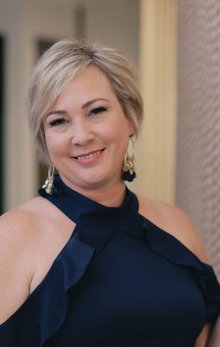
Linda Siegert
Senior Director of Global Procurement | SailPoint Technologies