
How Jabil’s Unified Supply Chain is Driving Global Growth
In the volatile landscape of global manufacturing, some see disconnection between the procurement and supply chain management functions as a liability. For Jabil, a company with over 150,000 employees across more than 25 countries, the solution was not merely to encourage cooperation between these departments, but to fuse them under a single executive mandate.
Frank McKay, Chief Supply Chain Officer (CSCO) at Jabil, represents a new breed of leadership in the manufacturing sector. As the first CSCO in the company's history to report directly to the CEO, his elevation marks a shift in how the organisation perceives the value of its external ecosystem.
A seat at the top table
The decision to elevate the supply chain function to the C-suite was a pragmatic response to a world of increasing complexity. With approximately 70% of Jabil’s revenue tied to material acquisition, the procurement function is a fundamental engine of the firm’s financial health.
“I think it was a decision that our CEO at the time made primarily based on the fact that it was a bit of a recognition of just how fragile supply chains really are across the globe,” Frank explains. “If we don't get it right on the procurement and supply chain side, it has a massive material impact on the company. And the CEO said, 'I want to sit and look the person who's responsible for those fragile supply chains in the eye and have a seat at the table and, quite honestly, be held accountable'.”
By removing the layers between the supply chain lead and the CEO, Jabil has ensured that procurement considerations are baked into the larger enterprise conversation regarding investment strategy and company direction. For Frank, this transparency is vital. He notes that the shift allows him to hear about strategic developments firsthand rather than receiving them "second or third hand", an advantage he believes more organisations should adopt.
Breaking the silos
The integration of procurement and supply chain functions under Frank was born of a theory that knitting together the entire ecosystem, from downstream suppliers to customer-facing logistics, would yield more "intelligent answers" for Jabil’s clients. These clients include over 400 of the world’s most recognisable brands in sectors ranging from automotive and healthcare to aerospace and defence.
Operating in such high-stakes environments requires a unified front. The objective is to manage risk, delivery and manufacturing so seamlessly that customers themselves do not have to make heavy investments in their own supply chain resilience. This "supply chain-enabled" approach has also opened new revenue streams. Jabil has moved beyond being a practitioner of supply chain management to becoming a provider of it.
Under Frank’s leadership, the function has started its own services division. “We were able to pitch taking the company beyond the traditional procurement supply chain function to actually allowing the function to launch its own services organisation and division organically to start with,” he says. This has evolved into inorganic growth, where the company reinvests dollars into acquisitions that build out a portfolio of services, effectively turning the procurement function into a profit centre.
The human-centric mantra
Despite the scale of Jabil’s operations, managing more than 100 facilities worldwide, Frank remains committed to a "people, processes, technology" hierarchy. In an era where many firms rush to implement digital solutions as a cure for disruption, Frank warns against reversing this order.
“If we don't get the talent right, and we don't have really smart people figuring out really complex challenges and creating solutions for that, then it doesn't matter what kind of tech you invest in,” Frank says. “It was always about the people first, then build out these mature processes and then go make sure that you're selecting the proper technology.”
To maintain consistency across 3,000 practitioners, the organisation adheres to a core framework known as the "Four Cs":
- Collaboration
- Communication
- Consistency
- Credibility
These principles serve as the bridge between high-performance teams and the technology they employ. Frank highlights the importance of "closed-loop" systems in maintaining this credibility. For instance, when a negotiation takes place at a global level, Jabil ensures that the business award actually translates into a purchase order at the local site level, a logistical feat when dealing with 30 different countries and a hundred plus factories.
“Suppliers love to score you on that conversion of, 'Hey, you gave me an award at the global table and it actually did come through as a purchase order,'” Frank says. This reliability builds the long-term relationships necessary to navigate periods of scarcity or disruption.
Digital enablement and the AI frontier
While people remain the priority, Jabil’s competitive edge is sharpened by a suite of proprietary tools including MI6, Procurement Intelligence Platform (PIP) and vCommand. These platforms, which have been in development for 15 years, provide the agility required to react to real-world events in real time.
If an earthquake occurs, these tools allow the team to assess the impact on the supply base immediately. This allows the firm to pivot and ensure an "assurance of supply", keeping factories running and helping customers reach the market on time.
Looking ahead, the next phase of this digital journey is the deep integration of AI. Jabil is currently experiencing unprecedented growth, largely driven by the demand for data centre infrastructure and AI hardware. It is a cyclical advantage: Jabil builds the infrastructure that enables AI and, in turn, it uses AI to refine its own operations.
“We’ll continue to adopt the capabilities that AI brings to the table. I think we'll be more agile. I think we'll be more transparent. I think we'll be more efficient and more effective by utilising what AI has to offer,” Frank predicts. This applies not just to the manufacturing floor, but also to finance, legal and the CSCO’s office itself.
Navigating growth and resilience
When asked what keeps him awake at night, Frank’s answer is surprising: it is not a lack of business, but the sheer volume of it. The primary challenge is keeping up with demand while ensuring the supply chain can cope with global instability.
“What we build for customers is the hardest, most complex product on the face of the planet, and it's not easy. And it's why there's not a thousand Jabils out there,” he says. The complexity of the products, combined with a world where political and economic shifts occur weekly, means the supply chain must be inherently reactive.
The company’s growth strategy remains a mix of organic expansion and "tuck-in" acquisitions. Whether acquiring capabilities in liquid cooling for data centres or expanding medical healthcare technologies, the goal is to open the "aperture of capabilities".
This is seen through a number of tools Jabil have acquired or gone into joint ventures with, such as Velocity and Rebound. Frank explains that Jabil operates as an "engineering led supply chain enabled manufacturing solutions provider," a tagline that defines their market approach and constant search for capabilities to solve customer challenges.
Frank emphasises that the services are "built by practitioners for practitioners," highlighting that they operate from within the "theatre" of complex supply chain management rather than looking in from the outside. Jabil assists customers through consultancy, managed services or sourcing hard-to-find parts, even extending to sustainability efforts like "memory converted and giving it a second life." Jabil maintains a broad set of capabilities that they continue to expand through both organic growth and "inorganic through acquisition."
This is particularly evident in Jabil’s procurement and supply chain services, which are marketed as being "built by practitioners for practitioners". This means the advice given to clients is based on the daily reality of managing one of the world's most complex supply networks. This practical expertise extends into sustainability, where Retronix, a Jabil company, helps customers repurpose and refurbish components like memory, giving them a "second life" in the market.
Jabil & ID8 Global: Redefining the future of autonomous supply chain management
In an era of increasing global volatility, traditional methods of managing procurement and logistics are no longer sufficient. To address these modern challenges, ID8 Global, a strategic joint venture between Cyferd and Jabil, launched a transformative, autonomous software platform designed to redefine global operations through generative AI.
ID8 Global represents the intersection of deep operational experience and cutting-edge technological innovation. By merging Jabil’s unparalleled manufacturing footprint with Cyferd’s Neural Genesis, a proprietary, self-learning AI engine, the partnership offers a solution that is both highly intelligent and battle-tested in real-world environments. This synergy allows organisations to move beyond outdated, manual processes and embrace adaptive, AI-driven strategies that deliver measurable business outcomes quickly and efficiently.
The platform empowers teams to autonomously manage complex, multi-tiered supply chains with exceptional speed and precision. Frank McKay, Chief Supply Chain Officer at Jabil, notes that the company is constantly seeking innovations that allow them to be more resilient in managing the fragility of global supply chains. ID8 Global facilitates this by allowing enterprises to transact with suppliers and inform customers in real-time. If a disruptive event occurs, such as an earthquake in Japan, the platform enables a rapid pivot to ensure an assurance of supply, keeping factories running and products reaching the market in the expected timeframe.
"ID8 allows us to transact with our suppliers, inform our customers and keep them abreast of what's going on in the world from a supply chain standpoint, we can show how quickly we're addressing that issue, how quickly we are pivoting to make the necessary steps and changes,” say Frank.
At the core of the ID8 Global approach is a commitment to flexibility. Recognising that no two organisations are the same, the company delivers procurement solutions built around each customer’s unique operational needs. From supplier onboarding and spend analysis to enterprise-wide deployment, ID8 Global combines pre-packaged tools with bespoke customisation to ensure transparency at every stage. This secure, customisable framework is designed to evolve alongside changing business requirements, allowing organisations to focus on growth and innovation with minimal operational disruption.
Backed by decades of Jabil’s manufacturing excellence and powered by Cyferd’s next-generation AI capabilities, ID8 Global represents a new era of intelligent enterprise transformation. By combining intelligent automation with deep industry expertise, the partnership is helping organisations unlock the full potential of their procurement and supply chain operations while effectively shaping the future of autonomous business management.
Empower your team with the future of procurement. CTA: Visit id8-global.com
A 60-year legacy in a high-tech future
Despite the rapid technological evolution, Frank attributes much of Jabil’s success to a culture that has remained largely unchanged for six decades. He describes the company DNA as a simple recipe: work hard, serve customers and treat suppliers with the same respect as clients.
“It sounds really simple, but it works and we're really fortunate we don't lose a lot of people,” Frank notes. In a field as high-pressure as global procurement, retention of talent is perhaps the ultimate metric of success.
As Jabil looks to the future, the focus remains on scaling to meet the "crazy demand" of the AI era while maintaining the resilience that a direct line to the CEO provides. For the procurement audience, Jabil’s model offers a clear blueprint: elevate the function, integrate the silos and always put the practitioner before the platform.
The world may remain fragile, but by building a supply chain that is "engineering-led and supply chain-enabled," Jabil is proof that procurement can be a primary driver of enterprise value rather than just a cost to be managed.
Company portals

Executives
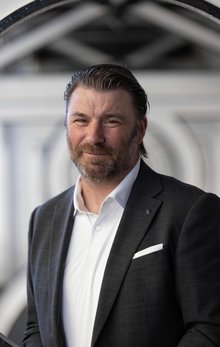
Frank McKay
Chief Supply Chain Officer