What SINES Data Campus Means For Procurement Sustainability
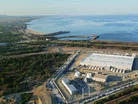
Nscale's €695m (US$812.6m) investment in Portugal's SINES Data Campus demonstrates how procurement strategies are evolving to prioritise renewable energy infrastructure and water conservation technologies in large-scale data centre developments.
The SINES Data Campus is positioning itself as one of Europe's most ambitious data centre projects and provides a benchmark for procuring sustainable, ESG-compliant AI infrastructure that reduces supply chain carbon and water risks.
When fully operational in 2030, its computing capacity is expected to reach 1.2GW, which will place it amongst the world's most powerful facilities.
The facility operates entirely on renewable energy whilst utilising seawater for cooling requirements, factors that influence long-term operational cost projections and environmental compliance mandates.
Repurposing industrial infrastructure
Start Campus, the firm responsible for developing, operating and managing the site, was founded in Lisbon in 2020.
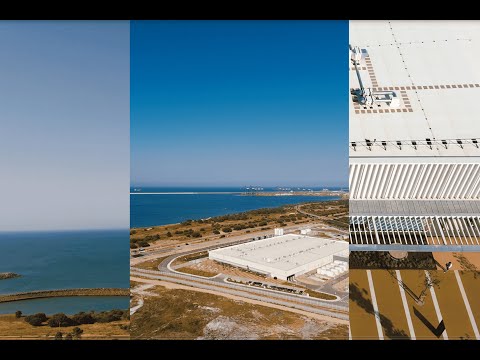
The company identified strategic value in Sines, a small town on Portugal's Alentejo coast, where a parcel of repurposed industrial land sat adjacent to a recently decommissioned coal-fired power station formerly operated by EDP (Energias de Portugal).
The site's existing seawater intake basin and direct access to international subsea fibre cables presented procurement advantages that reduce capital expenditure on new infrastructure.
Start Campus developed plans that leveraged these existing assets, and the Portuguese government classified the project as one of National Interest in March 2021.
Construction of the first phase commenced in April 2022, with SIN01, the campus's first data centre, becoming operational in late 2024.
According to Eurostat, 87.5% of Portugal's electricity was generated by renewables in 2024, a factor that makes the low-carbon operational model more commercially viable for organisations procuring data centre capacity.
"At Start Campus, we are committed to building the foundation for the next generation of sustainable, AI-ready digital infrastructure. Power is one of the most critical resources in today's digital infrastructure. But it's not just about access – it's about managing power efficiently, intelligently and sustainably at scale."
- Start Campus is building and operating the SINES Data Campus
- The campus utilises 100% renewable energy
- It targets an 'industry-leading' power usage effectiveness of 1.1
- It targets a water usage effectiveness of 0 by harnessing the cooling power of the ocean
Ocean cooling reduces procurement risks
While renewable energy procurement represents a significant consideration, the campus's approach to water consumption offers the most compelling advantage for risk-conscious procurement teams.
SIN01 is positioned as the world's first AI data centre to use ocean water as its primary cooling method, drawing water directly from the Atlantic and returning it just 1°C warmer.
The facility's construction on the site of a former coal plant has enabled the reuse of existing piping infrastructure that previously cooled its predecessor, potentially reducing capital costs associated with cooling system procurement.
With temperatures rising and regulatory pressure mounting around water scarcity, data centres have faced scrutiny for freshwater consumption. This approach mitigates those supply chain and compliance risks entirely.
The facility achieves a Water Usage Effectiveness rating of zero and a design Power Usage Effectiveness (PUE) of 1.1, metrics that influence procurement evaluations focused on operational efficiency and environmental performance.
Strategic investment rationale
The data centre industry faces mounting pressure to justify resource consumption in procurement and operational decisions. According to the UN, data centres consumed an estimated 448TWh of electricity last year, exceeding the consumption of all but 10 countries globally.
With such substantial resource requirements, facilities like the SINES Data Campus demonstrates how organisations might procure sustainable, lower-impact computing infrastructure. This positioning has driven Nscale's substantial capital commitment to the campus's expansion.
Josh Payne, CEO and Founder of Nscale, says: "Building on a proven foundation, the expanded deployment in Sines, Portugal creates one of the most advanced environments in Europe for high-density AI infrastructure."
"It also represents one of the largest AI infrastructure investments in Portugal's history – and among the most significant in the EU – reflecting the surging demand we're seeing for Nscale's services," he adds.
While the Portuguese site benefits from geographical advantages that reduces procurement complexity compared to other locations, operating SIN01 requires ongoing commitment to sustainable practices.
As Dunn explains: "It takes daily attention to make sure that you can be as sustainable as possible."
Company portals



Executives
Josh Payne
Founder & CEO

Robert Dunn
CEO