S2C Strategy: Navigating Macro Supply Chain Risks
The macro economy has forced procurement to evolve from a back-office function to a core pillar of enterprise strategy.
While driving savings is still a core mandate, supply continuity and risk mitigation are taking centre stage for CPOs. Amid ongoing tariff volatility, trade tensions and shipping disruptions, source-to-contract (S2C) strategies have heavily pivoted away from single-source global dependencies toward multi-sourcing, nearshoring and regional supplier ecosystems.
Other shifts in the industry include agentic workflows, removing isolated systems and instead linking demand signals directly to automated market intelligence tools. Automated procurement agents are also starting to handle more routine supplier onboarding, invoice matching exceptions and simple contract renewals.
ESG has also had a significant impact, no longer a CSR footnote, tracking sustainability efforts is embedded directly into the S2C selection criteria.
To successfully navigate this landscape, organisations can no longer allow S2C and procure-to-pay (P2P) to operate in isolated silos.
When strategy and execution are disconnected, companies suffer from value leakage, where brilliant, ESG-compliant contracts are undermined by a lack of buy-in, communication or alignment
As procurement looks to unite the entire lifecycle into a frictionless, data-driven source-to-pay (S2P) ecosystem, instantly pushing negotiated terms directly into everyday buying workflows.
Procurement is the predictive engine capable of protecting margins, ensuring compliance and securing the global supply chain in real time.
- Generative AI and intelligent automation is redefining S2C by automating the most labour-intensive parts of the sourcing and contracting lifecycle.
- Blockchain and smart contracts address the chronic lack of transparency and trust in global supply chains.
- Vertical B2B marketplaces are offering users deep industry-specific expertise and services.
- Predictive and centralised analytics are turning S2C into a strategic foresight engine.
“As brands are increasingly discovered and chosen in environments shaped by AI, we must lead this shift ”
Unilever and Google Cloud
Redefining value creation, Unilever and Google Cloud have entered into a five-year partnership to accelerate the CPG’s business transformation.
Utilising Google Cloud’s advanced AI, data, platform and next-generation marketing capabilities, Unilever is building new capabilities in brand discovery, measurement and AI-augmented marketing. It is also building an enterprise-wide, AI-first digital backbone to generate demand faster, turn data into actionable insights and respond to market shifts with greater agility.
This foundation will be the backbone of agentic workflows capable of executing complex tasks across Unilever’s business processes.
“Technology has moved to the core of value creation at Unilever,” says Willem Uijen, Chief Supply Chain and Operations Officer at Unilever.
“As brands are increasingly discovered and chosen in environments shaped by AI, we must lead this shift. This collaboration with Google Cloud sets a new level in how technology can power commerce and growth in the fast-moving consumer goods industry, ensuring Unilever is agile, fit for the future, and equipped to unlock value at every level of the company.”
Tara Brady, President, EMEA at Google Cloud, adds: “In partnering with Unilever as it boldly reimagines its business processes, we are not just modernising legacy systems; we are deploying our advanced models, such as Gemini, to create a system of intelligence that reasons, learns, and acts. This will set a new standard for agility and consumer engagement in the CPG sector.”
With this partnership, Unilever and Google will transition key enterprise applications and data platforms to Google Cloud, establishing a connected data foundation that enables scalable AI deployment across its entire value chain. This digital transformation combines Unilever’s deep CPG expertise with Google’s pioneering technologies, fast-tracking the adoption of advanced AI to sustain a long-term competitive edge in a shifting market.
“We are not just modernising legacy systems; we are deploying our advanced models, such as Gemini, to create a system of intelligence that reasons, learns, and acts ”
Walmart: Expanding its first mile capabilities
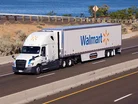
Simplifying inbound supplier logistics, Walmart is getting products to shelves and customers faster. By building a more connected, scalable and tech-enabled supply chain, it hopes to improve its service and low costs.
Expanding its first mile capabilities for prepaid suppliers, Walmart is utilising its national supply chain network to create a scalable way to merge shipments to create greater transport efficiency.
Suppliers send products under a single national purchase order to one location, and from there Walmart combines the inventory and distributes it across its 42 regional distribution centres (RDCs).
“We’re focused on making our supply chain simpler, faster and more efficient for suppliers, while also keeping products in stock for our customers,” says Mike Gray, Senior Vice President of Supply Chain at Walmart US.
“By strengthening our first-mile capabilities, we’re reducing complexity and keeping goods moving, so we can deliver even more value every day.”
By doing this, Walmart’s prepaid consolidation program is designed to make things easier for suppliers, giving them flexibility and transparency.
The model improves efficiency without requiring changes to prepaid freight terms, reduces total cost, improves speed to shelf and flow consistency and reduces variability.
“We're focused on making our supply chain simpler, faster and more efficient for suppliers, while also keeping products in stock for our customers ”

Schneider Electric: Actionable, risk-mitigated procurement strategies
Transforming sustainable procurement, Schneider Electric’s Resource Advisor+ is a next-generation energy and sustainability intelligence platform powered by agentic AI workflows.
Utilising Sera, the company’s lead AI agent, the ecosystem integrates proprietary knowledge from two decades of consulting expertise to turn complex emissions and energy data into actionable, risk-mitigated procurement strategies.
The innovation directly transforms the source-to-contract lifecycle by embedding human experience into automated workflows to accelerate supplier engagement and carbon optimisation.
At the core of its upstream value is the specialised supply chain product. It streamlines first-mile supplier onboarding and data collection, allowing procurement teams to manage Scope 3 emissions reductions at scale during the sourcing phase.
“Resource Advisor+ introduces a completely new way for companies to manage their energy and sustainability performance," says Steve Wilhite, Executive Vice President for SE Advisory Services' global Energy & Sustainability Practice.
“By automating complexity and turning data into action, [it] represents a fundamental shift in how we help our clients achieve meaningful, enterprise-wide outcomes. ”
"By automating complexity and turning data into action, [it] represents a fundamental shift in how we help our clients achieve meaningful, enterprise-wide outcomes.”
By unifying fragmented data into a single, collaborative command centre, Schneider Electric enables organisations to move past static reporting.
Instead, procurement teams can confidently evaluate supplier risk and execute climate-conscious contracts that align energy spend with long-term corporate decarbonisation goals.
Company portals




Executives

Mike Gray
SVP of Supply Chain at Walmart US
Steve Wilhite
Executive Vice President
Tara Brady
President, Google Cloud for Europe, Middle East and Africa

Willem Uijen
Chief Supply Chain and Operations Officer