
Mars: Scaling up its Regenerative Almond Sourcing

KIND Snacks, a subsidiary of Mars, is championing regenerative agriculture efforts that align with its vision of sourcing quality almonds.
In 2026, KIND achieved a significant milestone by scaling regenerative agriculture practices across approximately 50% of its almond volume. This progress ensures the organisation remains on track to fulfill its ambitious sourcing commitments by 2030.
Daniel Calderoni, CEO of KIND North America, says: “We are incredibly proud to hit the halfway mark in our almond sourcing pledge. The KIND Almond Acres Initiative has proven that regenerative agriculture is a scalable, operational engine,”
“By sharing our outcomes and learnings, we are aiming to move the needle in encouraging the industry to build a more sustainable supply chain – one that's better for the planet and for business.”
KIND’s pilot process
Launched in 2023 in collaboration with supplier ofi, KIND's Almond Acres Initiative serves as a regenerative agriculture pilot. The project aims to achieve a mass-balance goal of sourcing 100% of its almonds from farms utilising regenerative practices by 2030.
Through KIND Almond Acres, the corporation tested regenerative agriculture practices and innovative technologies across multiple farms in California which is responsible for 80% of the globe’s almond production.
By gathering data and insight from soil health, resource efficiency and on-farm resilience, the practice of regenerative agriculture will bring extensive environmental benefits at scale.
- Increased water use efficiency: The pilot drove a 19.5% efficiency gain in water management.
- Reduced reliance on costly inputs: Reduced the need for nitrogen fertiliser by 33%, demonstrating that regenerative soil management is a direct driver of operational efficiency.
- Reduced overall carbon intensity: After the three-year pilot, the acres saw a decrease in overall carbon intensity of 28%.
- Improved soil health: Marked improvements in soil health metrics like increased soil organic carbon and decreased compaction were demonstrated across all pilot plots.
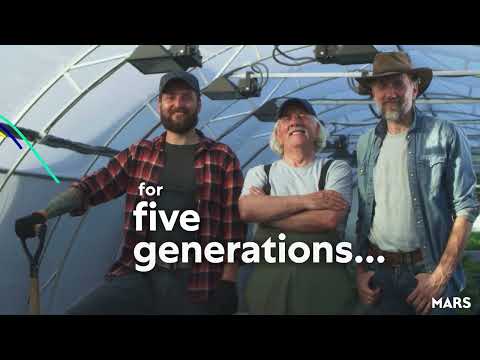
“KIND is moving quickly from a test environment to large-scale implementation,” explains Zac Ellis, Senior Director of Agronomy of ofi, North America.
“In almond orchards, a variety of regenerative practices such as cover crops, lower-carbon fertilisers, compost and biochar can directly enhance ingredient quality and resilience. We are proud to partner with KIND to help demonstrate a model that can be replicated and scaled across the broader industry.”
The success of the pilot is attributed by KIND to its strategic collaborations with non-profits such as Mad Agriculture and the California Water Action Collaborative (CWAC), alongside research partnerships with the University of California Davis and the University of California Merced.
KIND was purchased by Mars for US$5bn in 2020.
Mars regenerative agriculture actions
In 2025, the pet nutrition sector of Mars corporation challenged European policymakers to lend its support toward scalable solutions for climate-smart agriculture.
Because of collaborations with suppliers like Agreena, Biospheres in 2024, over 300 farmers in Mars Petcare’s European supply chain have utilised climate-smart practices on more than 60,900 hectares.
Paolo Rigamonti, Regional President Europe Pet Nutrition at Mars adds: “Europe's farmers play a vital role in improving soil health,”
“Through regenerative techniques, they can store more carbon, improve water filtration and support local ecosystems.
"Across Europe, Mars is investing to help farmers adopt these practices – but they can’t do it alone. We need the right conditions in place and policies that accelerate what is already working.”
Company portals

Executives

Paolo Rigamonti
Regional President Europe Pet Nutrition