
Häagen-Dazs: Keeping Ice Cream Supply Chain Emissions Low
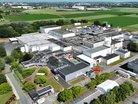
In 1992, Häagen-Dazs opened its plant in Arras, France. As the company has expanded, so has its dedication to ensuring the best quality ice cream. Throughout the years, it has received millions of euros into development projects, helping it modernise.
Now, the Arras plant is decarbonising its supply chain, investing in renewable sources for its energy consumption and helping its farmers adapt to the changing climate demands.
The site has a significant focus on regenerative agriculture, supporting its farmers as they develop operational resilience and responsibility.

Sourcing locally
Häagen-Dazs, owned by General Mills, has a commitment to simplicity and quality. It is proud of its simplicity, celebrating its six-ingredient vanilla, which is made up of only cream, milk, sugar, eggs, vanilla and water.
Operating within a 100 km region means that its supply chain is kept local. This limits both its emissions production and any opportunity for quality to drop during transportation.
“Arras is part of a broader effort to reduce environmental impact across the value chain,” explains Nicolas Cayeux, Plant Director at Häagen-Dazs.
“Häagen-Dazs sources high-quality milk and cream close to our site, and General Mills is running a program with dairy cooperative Prospérité Fermière Ingredia to decarbonise its supply. 48 dairy farms are currently part of a decarbonisation programme. Each farm receives an individual environmental diagnosis, leading to a farm-specific, quickly actionable action plan to optimise agricultural practices and reduce carbon emissions.
“Since the launch of the programme in 2024, the farm group’s greenhouse gas emissions are already 12% lower than the rest of the cooperative’s farms. The action plans aim to reduce emissions by a further 7% from the original baseline within five years.”
Regenerative agriculture and upskilling farmers
“Häagen-Dazs is synonymous with the highest quality ice cream, and therefore it’s essential that we source our ingredients from where they are best,” adds Benjamin Duché, Regenerative Agriculture Lead, Europe & Australia at General Mills.
“For dairy – the most important ingredient in our ice cream - our priority is sourcing as much as we can as close to our plant as possible. The milk and cream used in Häagen-Dazs products is overwhelmingly French, mostly coming from 300 dairy farms in the vicinity of our Arras site.”
The company, however, is more than just sourcing locally. It is also helping farmers gain new skills with regenerative agriculture. This is helping both the farmers develop supply chain resilience and tackling Häagen-Dazs’ scope 3 emissions.
General Mills first launched its regenerative agriculture pilot in France in 2021, aiming to reduce its value chain emissions 30% by 2030. The pilot began with 10 farms, focusing on farmer and landscape priorities. Now, 48 dairy farmers in Northern France are taking part in transitioning their operations to include regenerative agriculture practices.
The company aims to have a million acres of regenerative agriculture farmland in its value chain by 2030, with a current standing of 600,000 globally. General Mills and the Arras plant are working to upskill these farmers, relying on local organisations including Ingredia, Unéal and Tereos to support with training.
Value chain collaboration
This is a collaborative effort, celebrating the farmers taking part, the co-operatives helping with training and more.
“We can’t go at it alone, so we advocate for a collaborative approach to regenerative agriculture to accelerate systems-level change. Our programs partner with suppliers, cooperatives, NGOs and farmers to advance the practice,” Benjamin explains.
“Everyone along the supply chain wants farming to be both financially and ecologically sustainable, and we are all working together to advance our shared goals.”
To tackle its Scope 3 emissions, Häagen-Dazs needs its entire value chain to be involved in this process, which is why General Mills is working with Prospérité Fermière Ingredia to support the dairy sector to reduce methane and ensure farming optimisation. This way, consumers can enjoy its ice cream with the knowledge that it has been made responsibly.
Company portals

Executives
Benjamin Duché
Europe & Australia Regenerative Agriculture Leader